Innovation & green technologies
The transition towards sustainable living has moved far beyond simple energy efficiency measures. Today’s green technologies represent a fundamental reimagining of how homes interact with energy, materials, and natural resources. For homeowners, self-builders, and renovators across England, understanding these innovations is no longer optional—it’s essential for creating homes that are resilient, cost-effective, and genuinely sustainable.
This comprehensive resource explores the cutting-edge technologies and methodologies transforming residential construction and operation. From ultra-efficient building standards that prioritise occupant health to intelligent systems that earn money by balancing the national grid, we’ll demystify the innovations shaping the future of sustainable housing. Whether you’re planning a self-build project, renovating an existing property, or simply curious about reducing your environmental footprint, this article provides the foundational knowledge you need to navigate the green technology landscape with confidence.
High-Performance Building Standards: The Passivhaus Approach
The Passivhaus standard represents the gold standard in energy-efficient construction, yet it’s frequently misunderstood as merely an energy-saving exercise. In reality, this rigorous German-originated methodology prioritises occupant comfort and health alongside dramatic reductions in heating and cooling demand.
At its core, Passivhaus achieves its remarkable performance through five key principles: exceptional insulation levels, airtight construction, high-performance windows, thermal bridge-free design, and mechanical ventilation with heat recovery (MVHR). The latter component often raises questions about indoor air quality, yet properly designed MVHR systems actually deliver superior air quality compared to traditional naturally ventilated homes by continuously filtering incoming air whilst recovering up to 95% of heat that would otherwise be lost.
For those considering Passivhaus in England, understanding how it compares to standard UK Building Regulations is illuminating. Whilst current Part L requirements mandate reasonable energy efficiency, Passivhaus demands heating energy consumption below 15 kWh per square metre annually—typically representing an 80-90% reduction compared to conventional new builds. This extreme performance level requires meticulous attention during both design and construction phases, with certification processes that verify every detail through thermal modelling, pressure testing, and comprehensive documentation.
However, achieving such high insulation and airtightness levels introduces specific risks that must be carefully managed. Overheating in highly glazed designs is a genuine concern, particularly as UK summers become warmer. Successful Passivhaus projects balance solar gain with strategic shading, appropriate glazing specifications, and night-time ventilation strategies. Project timelines must also account for the additional detailing work required—rush the process, and expensive failures during certification testing become likely.
Energy Storage Systems: Beyond Solar Self-Consumption
Home battery storage has evolved dramatically beyond its original purpose of storing surplus solar generation. Modern systems enable energy independence, grid arbitrage, and blackout resilience—transforming homeowners from passive consumers into active participants in the energy market.
Understanding Battery Fundamentals
Two critical specifications determine battery performance and longevity: depth of discharge (DoD) and cycle life. DoD refers to how much of the battery’s capacity can be safely used—for example, a 10 kWh battery with 90% DoD offers 9 kWh of usable storage. Cycle life indicates how many charge-discharge cycles the battery can complete before capacity degrades significantly. Quality lithium-ion systems typically offer 6,000-10,000 cycles at 80-90% DoD, translating to 10-15 years of realistic service life.
The C-rate specification determines how quickly batteries can charge or discharge. A 1C rating means the battery can fully charge or discharge in one hour; a 0.5C battery requires two hours. This becomes crucial when optimising for time-of-use tariffs or participating in grid services that require rapid response.
Sizing for Resilience and Lifestyle
Effective battery sizing begins with calculating your total daily consumption, not just excess solar production. A typical UK household consumes 8-12 kWh daily, but this varies enormously based on heating systems, electric vehicle charging, and lifestyle patterns. Rather than sizing solely for summer solar surplus, forward-thinking homeowners dimension storage for winter resilience when solar generation drops by 70-80% compared to summer peaks.
The choice between modular and fixed capacity systems significantly impacts future flexibility. Modular designs allow capacity expansion as needs evolve—particularly valuable as households electrify heating and transport. Fixed systems offer lower upfront costs but lock you into initial capacity decisions.
System Architecture and Safety
The AC-coupled versus DC-coupled debate centres on efficiency and retrofit compatibility. DC-coupled systems connect batteries directly to solar panels before inverting to AC, offering 4-6% higher round-trip efficiency. AC-coupled systems prove easier to retrofit to existing solar installations and offer greater component flexibility, though with slightly lower efficiency.
Battery location demands careful consideration due to thermal runaway risks—the rare but serious phenomenon where battery cells overheat and ignite. Quality systems incorporate multiple safety mechanisms (thermal management, cell-level monitoring, automatic disconnection), but installation location matters. Garages, utility rooms, or external enclosures with adequate ventilation provide safer options than living spaces or lofts where early fire detection may be delayed.
Financial Optimisation
Payback periods for battery storage have improved dramatically with the introduction of time-of-use tariffs offering off-peak electricity at 7-10p/kWh and peak rates of 30-40p/kWh. Intelligent battery systems automatically charge during cheap periods and discharge during expensive ones—a process called energy arbitrage that can save £300-600 annually for typical households, independent of solar generation. Winter months, when solar contribution diminishes, actually prove most valuable for arbitrage strategies.
Grid-Interactive Homes: Demand Side Response & Energy Trading
The most exciting frontier in home energy management involves getting paid to help stabilise the electricity grid. Demand Side Response (DSR) programmes compensate homeowners for adjusting consumption patterns or providing battery capacity when the national grid faces supply-demand imbalances.
The UK grid operates at precisely 50 Hz frequency—when demand exceeds supply, frequency drops; when supply exceeds demand, it rises. Traditionally, large power stations adjusted output to maintain balance, but renewable energy’s variable nature requires more distributed, responsive solutions. This is where equipped homeowners can participate through aggregator services that pool thousands of small batteries and controllable loads into “virtual power plants.”
Signing up for aggregator services typically requires compatible battery systems or smart appliances capable of automated remote control. Services like Octopus Energy’s “Saving Sessions” have demonstrated that homeowners can earn £100-300 annually by providing grid flexibility, with payments increasing during grid stress events. More sophisticated participants with battery storage and electric vehicles can earn substantially more through dynamic frequency response services.
The technology landscape is evolving rapidly. Smart plugs offer simple entry points for controlling non-critical loads like immersion heaters or EV chargers, whilst integrated smart appliances (heat pumps, batteries, vehicle chargers) provide seamless automation without manual intervention. EV charging optimisation represents a particularly lucrative opportunity—charging a 60 kWh battery during negative pricing windows (when the grid pays consumers to use electricity) can occasionally result in being paid to charge your vehicle.
However, these opportunities introduce legitimate data privacy concerns. Aggregators require detailed consumption data and remote control capabilities. Selecting providers with robust data protection policies and understanding exactly what control you’re ceding becomes essential. The best systems allow homeowners to set boundaries—defining minimum battery reserves, maximum acceptable home temperatures, or time windows when automation is prohibited.
Intelligent Home Automation: From Remote Control to Energy Optimisation
Genuine home automation transcends smartphone-controlled lighting to become an invisible intelligence layer that optimises energy consumption, enhances comfort, and reduces waste without conscious intervention.
The recently introduced Matter protocol represents a watershed moment for smart home adoption by establishing a universal standard allowing devices from different manufacturers to communicate seamlessly. Previously, homeowners faced frustrating incompatibilities between ecosystems; Matter eliminates these barriers, future-proofing smart home investments.
Effective automation relies on accurate presence detection, where geofencing technology shines by creating virtual boundaries around your home. When your smartphone crosses these boundaries, systems automatically adjust heating, disable unnecessary loads, or prepare the home for arrival. Successful geofencing requires careful setup—boundaries too tight trigger false departures when you’re gardening; too loose waste energy by heating the home whilst you’re still 30 minutes away.
The cloud-based versus local control debate involves weighing convenience against security and reliability. Cloud systems enable remote access from anywhere and automatic updates, but depend on internet connectivity and third-party servers. Local control systems operate independently but sacrifice remote access capabilities. The optimal approach often combines both: local automation for critical functions (heating, security) with cloud connectivity for convenience features.
Two often-overlooked automation considerations deserve attention. Phantom loads from poorly designed smart plugs can consume 2-5 watts continuously—seemingly trivial until you calculate that 10 such devices waste £15-25 annually whilst defeating the purpose of load control. Quality devices consume under 0.5 watts in standby. Security against hacking requires robust network segmentation, regular firmware updates, and strong authentication—mundane practices that prevent unauthorised access to home systems.
Sustainable Construction Materials: Bio-Based & Recycled Solutions
The construction industry’s environmental impact extends far beyond operational energy consumption. Material extraction, processing, and transportation account for substantial embodied carbon. Innovative materials are emerging that challenge conventional approaches by growing rather than being mined, or by giving waste products valuable second lives.
Bio-Based Materials and Carbon Sequestration
Bio-composite materials derived from hemp, straw, mycelium, or timber don’t merely reduce carbon emissions—they actively sequester atmospheric carbon within building fabric. A square metre of hempcrete wall can lock away 35-40 kg of CO₂, meaning the material arrives on site carbon-negative. These materials also offer hygroscopic properties (naturally regulating humidity) and excellent thermal performance.
Working with bio-composites requires different techniques than conventional materials. Hempcrete, for instance, isn’t structural and must be used alongside timber frames. Cutting and fitting involves standard carpentry tools, though dust extraction becomes important for respiratory protection. The durability question—bio versus synthetic—reveals surprising nuances. Whilst some bio-materials require more careful detailing around moisture exposure, properly installed systems demonstrate longevity comparable to conventional builds, with several hempcrete structures in France approaching their centenary.
Two practical challenges warrant attention: rodent damage risk and insurance approval. Lime-bound bio-materials generally resist rodent interest better than expected, but vulnerable junctions require appropriate detailing. Insurance for non-standard builds historically proved challenging, but growing familiarity with these methods is normalising approvals, particularly when certified installers and established systems are used.
Recycled Aggregates and Secondary Materials
Hard landscaping and foundations represent hidden environmental costs in most builds. Recycled aggregates derived from demolition waste, railway ballast, or industrial by-products dramatically reduce this impact whilst often proving more economical than virgin materials.
Understanding the source of secondary aggregates enables informed selection. Crushed concrete offers excellent performance for sub-bases; steel slag provides exceptional durability for driveways; recycled glass creates striking decorative surfaces. Sourcing locally reduces transport carbon—often the dominant environmental factor—making a locally-sourced recycled aggregate preferable to a “greener” virgin material transported 200 miles.
The permeable versus impermeable sub-base decision carries environmental and practical implications. Permeable specifications reduce surface water runoff, easing pressure on drainage infrastructure and reducing flood risk. The primary concern with recycled loads involves contamination—responsible suppliers provide certification confirming material is free from contaminants like asbestos, but visual inspection of deliveries provides additional assurance.
Water Conservation: Implementing Greywater Reuse Systems
Whilst energy receives deserved attention, water consumption represents another crucial sustainability frontier. The UK faces increasing water stress, particularly in southern and eastern England, where summer demand regularly exceeds sustainable supply. Greywater reuse systems can halve mains water consumption in typical homes.
Understanding the distinction between greywater and blackwater is fundamental: greywater originates from showers, baths, and hand basins (not kitchens, due to grease and food particles); blackwater contains sewage and requires entirely different treatment. Greywater systems capture relatively clean wastewater for toilet flushing or garden irrigation, avoiding the energy and chemical costs of full wastewater treatment.
The simplest implementations involve direct garden diversion—routing shower and bath waste directly to irrigation areas via gravity-fed pipes. This approach requires no pumps, filters, or storage, making it ideal for retrofits. More sophisticated systems incorporate biological treatment using wetland-style filters or mechanical filtration, enabling safe toilet flushing use and extended storage duration.
Storage duration introduces pathogen growth risks—bacteria multiply in stored greywater, particularly in warm conditions. Systems designed for same-day use (immediate garden irrigation) avoid this concern entirely. Multi-day storage systems require either treatment (biological or chemical) or acceptance that the water suits only subsurface irrigation or toilet flushing, not spray irrigation where aerosols might be inhaled.
Detergent selection matters significantly for plant safety when irrigating with greywater. Products high in sodium, boron, or bleach can damage sensitive plants and accumulate in soil. Eco-certified products formulated without these harmful ingredients enable safe long-term greywater irrigation. Rotating irrigation areas and avoiding direct application to edible crops provides additional safety margins.
The beauty of greywater systems lies in their scalability—from a simple bath-to-garden gravity pipe costing under £100, to whole-house systems with treatment and storage approaching £3,000-5,000. Even modest implementations deliver meaningful water savings whilst reducing strain on sewage infrastructure during heavy rainfall events when combined sewer systems overflow.
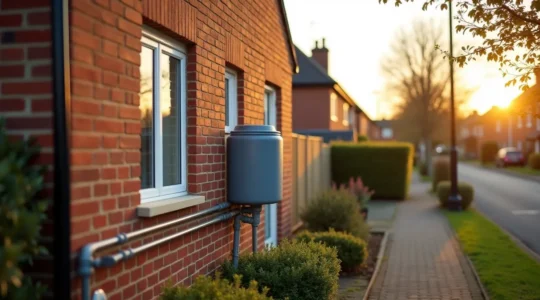
Is Retrofitting a Greywater System for Flushing Toilets Financially Viable in the UK?
For most English homeowners on metered water, retrofitting a greywater system specifically for toilet flushing is rarely a sound financial decision. The high initial installation…
Read more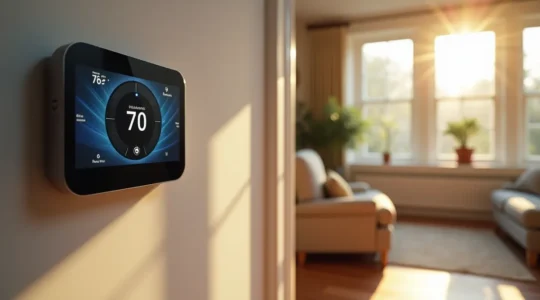
How to Use AI Heating Controls to Predict—and Optimise—Your Energy Needs
Your smart thermostat isn’t truly “smart” if you’re just using it as a fancy remote control; its real power lies in predictive automation. True intelligence…
Read more
Why Recycled Aggregate is the Only Industrial Choice for a UK Driveway Base
The true carbon footprint of your home renovation isn’t in what you see, but in the tonnes of virgin material buried beneath it. Recycled aggregates…
Read more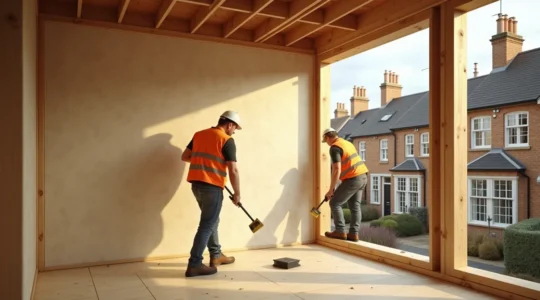
Are Mycelium Insulation Panels Ready for Mainstream UK Construction?
Mycelium insulation is no longer a lab-grown curiosity; it’s a commercially viable, carbon-negative material ready to challenge conventional insulators in the UK market. It actively…
Read more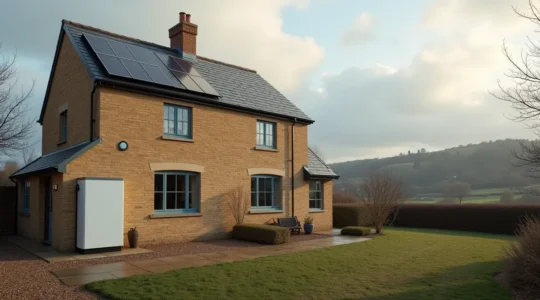
What Battery Capacity is Needed to Run a UK Home Off-Grid for 24 Hours?
Sizing a home battery based on your average daily usage from a utility bill is the most common and costly mistake made in the UK….
Read more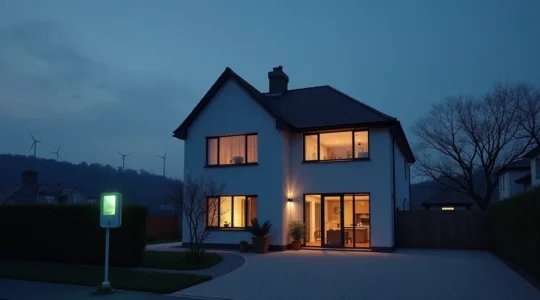
How to Earn Money by Turning Off Your Appliances During Demand Service Events?
The National Grid’s Demand Flexibility Service isn’t just about saving a few quid on your bill—it’s a gateway to actively ‘gaming’ the energy market from…
Read more
Why Is a Battery Storage System Essential Even Without Solar Panels?
A home battery without solar isn’t a backup device; it’s an active trading asset that turns your home into a micro-energy firm. It allows you…
Read more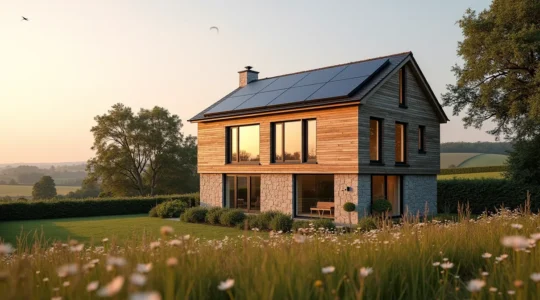
Is Building a Certified Passivhaus Worth the 15% Extra Upfront Cost?
The 15% Passivhaus premium isn’t an extra cost; it’s an investment to eliminate the costly “performance gap” that plagues typical UK new-builds, where designed efficiency…
Read more