Reducing your family’s waste isn’t about a hundred tiny, guilt-ridden changes; it’s about targeting the few “waste hotspots” that create the most impact.
- Much of the UK’s “recyclable” plastic is actually incinerated, making package-free shopping the most powerful lever.
- Strategic swaps like menstrual cups and learning to repair items offer significant financial savings.
Recommendation: Focus your efforts on the big three—packaging, food, and textiles—and use community support to make changes stick without burnout.
The weekly shop is done, but the mountain of plastic packaging left behind feels bigger than the food you’ve just bought. For busy families across the UK, this cycle of consumption and waste can feel overwhelming and unavoidable. You diligently sort your recycling, rinse out your yoghurt pots, and feel a pang of guilt every time the main bin overflows. The common advice—use a reusable coffee cup, make your own everything—often feels like another item on an already endless to-do list, and doesn’t seem to make a dent in the problem.
But what if the key to radical waste reduction isn’t about doing more, but about doing things differently? What if the problem isn’t just your household, but a systemic failure in how we handle waste in the UK? The truth is, many of our best efforts are undermined before our recycling bin even leaves the kerb. This isn’t about adding more chores to your life or aspiring to an unachievable, picture-perfect “zero-waste” lifestyle. It’s about making a few smart, high-impact changes that work with your busy schedule, save you real money, and tackle the root of the problem.
This guide moves beyond the recycling bin to offer a progressive, guilt-free approach. We will expose the reality of plastic recycling in the UK, reveal how to shop smarter at your regular supermarket, and quantify the real financial benefits of sustainable choices. We’ll explore practical solutions for everything from food scraps to clothing repair and, most importantly, show you how to maintain these new habits without feeling overwhelmed or alienating your friends and family.
This article provides a structured path to significantly reduce your household waste. The following sections break down the most impactful areas, offering practical, evidence-based advice tailored for life in the UK.
Contents: A Guilt-Free Guide to Halving Your Household Waste
- Why Is Most of Your “Recyclable” Plastic Actually Burned?
- How to Shop Package-Free at Supermarkets Without Paying a Premium?
- Menstrual Cups vs Tampons: What Is the Real Financial Saving Over 5 Years?
- The Pizza Box Mistake That Ruins an Entire Recycling Truck
- How to Repair Clothes Without a Sewing Machine to Extend Their Life?
- How to Give Sustainable Gifts That People Actually Want?
- How to Compost Cooked Food and Meat Scraps Using Bokashi?
- How to Maintain Eco-Habits Without Burning Out or Alienating Friends?
Why Is Most of Your “Recyclable” Plastic Actually Burned?
You carefully wash and sort your plastic packaging, confident you’re doing your part. The uncomfortable truth, however, is that much of this effort is wasted. The UK’s recycling system is facing a systemic crisis, and incineration is increasingly becoming the default solution. A recent landmark study revealed the shocking scale of the problem: UK households throw away 1.7 billion pieces of plastic packaging every single week, and only 17% of it is actually recycled here in the UK. The rest faces a far less sustainable fate.
The core issue is that our capacity to recycle complex plastics is vastly outstripped by the amount we consume. According to The Big Plastic Count 2024, a staggering 58% of household plastic waste is incinerated in the UK. This figure has risen sharply from 46% in 2022, indicating a growing reliance on an “energy-from-waste” model. With 57 incinerators already operating and 18 more planned, the UK is building an infrastructure geared towards burning waste, not creating a circular economy. This “recycling mirage” means that even when we follow the rules, the system itself is often set up to fail.
This understanding is not meant to induce guilt, but to empower. It shows that the single most effective action isn’t just better recycling, but preventing the plastic from entering your home in the first place. By focusing on reducing consumption at the source, you bypass the flawed system entirely. Knowing that flimsy plastic films and mixed-material pots are likely destined for the incinerator makes the choice to opt for loose vegetables or refillable containers a far more powerful act.
How to Shop Package-Free at Supermarkets Without Paying a Premium?
The idea of a “zero-waste shop” often conjures images of expensive, boutique stores that are impractical for a busy family’s budget and schedule. However, significant progress can be made within the aisles of your regular UK supermarket. The key is to shift your mindset from buying products to buying food, and to leverage the growing number of supermarket initiatives designed to reduce waste and cost simultaneously.
Start with the easy wins: the fresh produce aisle. Opting for loose fruit and vegetables over their pre-packaged counterparts is the simplest and most effective way to cut down on single-use plastic. Bring your own reusable produce bags to make it even easier. Next, visit the deli, butcher, and fish counters. Many larger UK supermarkets, including Morrisons and Sainsbury’s, will happily put your cheese, meat, or fish into your own clean container if you ask. This single habit can eliminate dozens of plastic trays and film lids from your weekly shop.

Furthermore, keep an eye out for cost-saving initiatives. A brilliant example is the “Taste Me, Don’t Waste Me” scheme. As one case study highlights, Sainsbury’s has introduced £2 boxes containing a generous amount of surplus fruit and vegetables. These boxes not only offer fantastic value for money but also directly combat food waste at the retail level. Found in larger stores, they represent a perfect financial co-benefit—you save money while actively reducing waste, proving that sustainable choices don’t have to come at a premium.
Menstrual Cups vs Tampons: What Is the Real Financial Saving Over 5 Years?
Beyond packaging and food, certain product swaps offer outsized benefits for both your wallet and the planet. Reusable menstrual products are a prime example. While the initial outlay might seem higher than a box of tampons, the long-term financial case is overwhelmingly clear. Disposable menstrual products are a constant drain on resources, contributing an estimated 200,000 tonnes of waste to UK landfills every year.
A menstrual cup, made from medical-grade silicone, can last for up to 10 years. The upfront cost, typically around £20-£25, is recouped surprisingly quickly. According to Mooncup’s official savings calculator, a single user can save approximately £390 over five years by switching from disposable tampons or pads. This calculation is based on using an average of 22 products per cycle. When you scale that over a lifetime of periods, the savings run into the thousands of pounds, representing a significant “waste dividend” that stays in your bank account.
Moreover, many local authorities in the UK actively encourage this switch through subsidy schemes, making the initial investment even lower. For instance, a partnership in Cambridgeshire allows residents to purchase a Mooncup for just £5. The table below illustrates the stark difference in cost over time, even when comparing against budget disposable options.
| Product Type | Initial Cost | 5-Year Total Cost | 10-Year Total Cost |
|---|---|---|---|
| Mooncup (via council scheme) | £5 | £5 | £5-£10 |
| Mooncup (retail) | £23.50 | £23.50 | £23.50 |
| Budget Tampons (£1/20 pack) | £1 | £70 | £140 |
| Premium Tampons | £3-5 | £195-£325 | £390-£650 |
This single, one-time purchase eliminates a constant stream of waste and recurring expense, making it one of the most powerful and financially savvy eco-habits a person can adopt. It’s sustainability by default, simplifying your life while delivering substantial savings.
The Pizza Box Mistake That Ruins an Entire Recycling Truck
The concept of “wish-cycling”—placing non-recyclable items in the bin hoping they’ll be recycled—is a major cause of contamination in the UK’s waste stream. A single contaminated item can lead to an entire truckload of otherwise perfect recyclables being rejected and sent to landfill or incineration. Analysis of UK waste management reveals that over 500,000 tonnes of recycling are rejected annually due to this very issue. One of the most common culprits? The greasy pizza box.
Cardboard is highly recyclable, but not when it’s soaked with grease and food residue. The oils cannot be separated from the paper fibres during the pulping process, ruining the entire batch. So, that cheesy base you toss in the recycling bin after a Friday night takeaway could be undoing the good efforts of your entire street. This isn’t about shaming a moment of convenience; it’s about understanding the mechanics of the system to make your efforts count.
The solution is simple and endorsed by waste authorities like WRAP (Waste & Resources Action Programme). It’s called the “Tear Test”. Instead of throwing the whole box in, you tear it in two. The clean, grease-free lid can go straight into your recycling bin. The greasy, food-stained bottom half must go into your general waste or, even better, your compost or Bokashi bin. This small action takes seconds but has a huge impact, ensuring the clean cardboard can be successfully recycled.
Your Action Plan: The ‘Tear Test’ Method for Pizza Boxes
- Inspect: Check the cardboard for any visible grease stains or food residue, typically on the bottom half of the box.
- Separate: If the base is greasy, tear off the entire contaminated bottom portion from the clean lid.
- Recycle: Place the clean, grease-free lid into your cardboard and paper recycling bin.
- Dispose: Put the greasy bottom part into your general waste bin or, if you have one, your food waste caddy or home compost system.
- Remember: Applying this simple check to all food-soiled cardboard ensures your good recycling efforts aren’t wasted.
This single habit is a perfect example of a high-impact lever. It requires minimal effort but directly prevents a major source of contamination, making the entire recycling system more efficient.
How to Repair Clothes Without a Sewing Machine to Extend Their Life?
The rise of fast fashion has led to a throwaway culture where clothes are often discarded at the first sign of a small tear or a fallen hem. Extending the life of your garments is a powerful way to reduce textile waste, one of the UK’s major waste streams. But for many, the idea of clothing repair is intimidating, conjuring images of complex sewing skills and expensive equipment. The good news is that a huge number of common repairs can be done quickly and easily with no sewing machine—or even a needle and thread—required.
A new generation of “no-sew” products makes mending accessible to everyone. For a fallen hem on trousers or a skirt, iron-on hemming web (like Wonder Web) is a game-changer. You simply fold the hem to the correct length, place the web inside, and press with a hot iron to create a durable, invisible bond. For small rips or holes in non-stretchy fabrics, fabric glue offers a strong, flexible, and often washable solution. Iron-on patches, once relegated to children’s school uniforms, are now available in a huge range of styles for reinforcing worn denim or covering stubborn stains.
These supplies are inexpensive and widely available in UK stores like Hobbycraft, John Lewis, and even local haberdashers. For a small investment of under £10, you can build a basic no-sew repair kit that will save countless garments from the bin and save you a small fortune on replacing them.
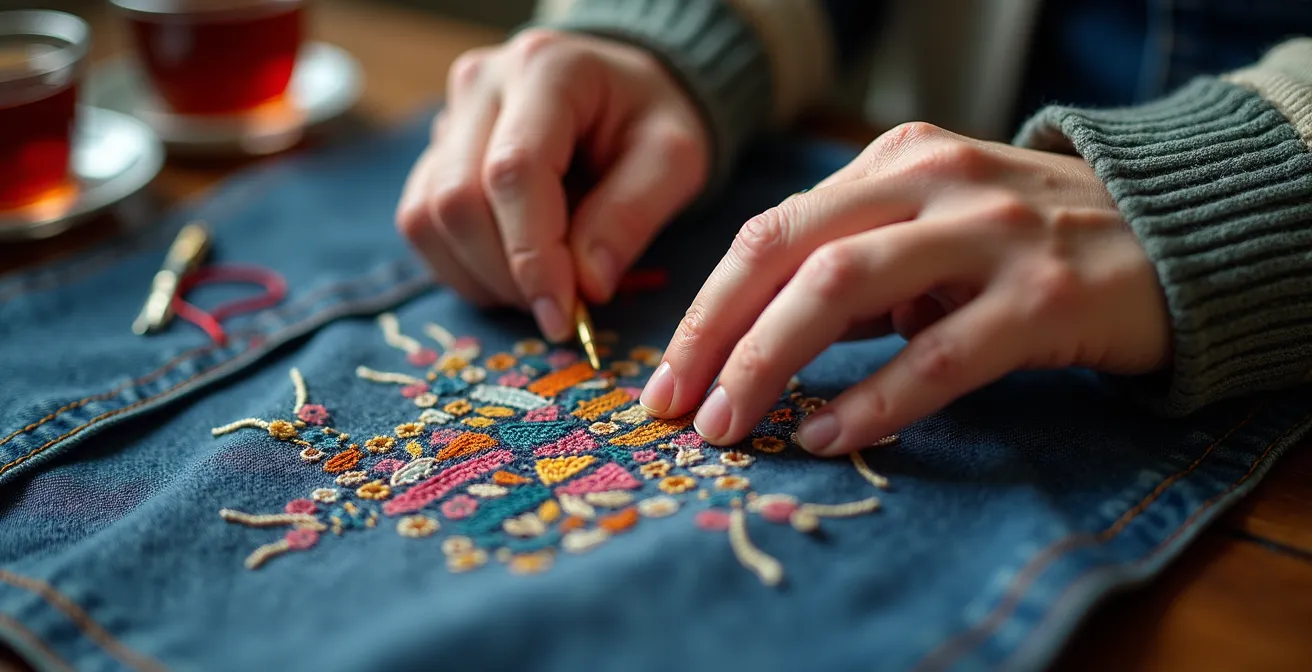
For those feeling more creative, techniques like “visible mending” (inspired by Japanese Sashiko stitching) turn a repair into a decorative feature. This approach celebrates the life of the garment and adds a unique, personal touch. It reframes mending not as a chore, but as an act of creativity that pushes back against the culture of disposability.
How to Give Sustainable Gifts That People Actually Want?
Gift-giving occasions can be a major source of waste, from unwanted novelty items to excessive packaging. The challenge is to give sustainably without being preachy or sacrificing the joy of the gift itself. The secret is to shift the focus from “stuff” to experiences, quality, and genuine desire. A sustainable gift is only successful if it’s something the recipient actually wants and will use.
One of the best strategies is to gift experiences rather than objects. This creates memories instead of clutter. For a UK-based recipient, the options are endless and can be tailored to any interest. Consider an annual membership to English Heritage or the National Trust for a history or nature lover. For a creative friend, a pottery workshop in Stoke-on-Trent or a local craft course can be a deeply rewarding experience. Food lovers might enjoy a Borough Market food tour or a cheese-making class. These gifts support local businesses and create zero physical waste.
When a physical gift is preferred, focus on quality, longevity, and ethics. Many UK B Corp certified companies are proving that sustainable products can be highly desirable. Case studies show that brands like Finisterre, which makes clothing from recycled ocean plastic, and BrewDog, with its popular craft beer subscriptions, have seen huge growth in gift sales. Their success lies in combining a strong ethical story with a high-quality product that people are genuinely excited to receive. The B Corp label acts as a trusted shorthand for ethical and environmental standards, making it easier to choose a gift that aligns with your values.
- For Heritage Lovers: English Heritage annual membership (£72) or National Trust membership (£84).
- For Craft Enthusiasts: A local pottery workshop (£45-£95) or a blacksmithing experience day (£120).
- For Nature Fans: A foraging course in a nearby forest (£65) or a wildlife photography workshop (£85).
- For Foodies: Vouchers for a favourite local restaurant or a subscription to a high-quality food box.
By focusing on experiences and high-quality, ethically-made products, you can give thoughtful, impressive gifts that people will cherish, breaking the cycle of unwanted items heading to landfill.
How to Compost Cooked Food and Meat Scraps Using Bokashi?
Food waste is one of the heaviest components of a household bin, and traditional composting methods have a major limitation: they can’t handle cooked food, meat, or dairy. For many families, this means a significant portion of their food scraps still ends up in general waste. The Bokashi method, an innovative Japanese system, offers a powerful solution. It’s not technically composting but a fermentation process that “pre-composts” all food waste, including the tricky items, right in your kitchen.
A Bokashi system consists of an airtight bin and a special bran inoculated with beneficial microbes. You simply layer your food scraps (chopped small) with a sprinkle of the bran. The microbes get to work anaerobically (without oxygen), fermenting the waste in just a couple of weeks. This process neutralises odours and pickles the food, preventing it from rotting. A key benefit is the production of “Bokashi tea,” a nutrient-rich liquid you drain from the bin’s tap every few days, which can be diluted and used as a potent fertiliser for houseplants.
The main challenge, especially for those in flats or without a garden, is what to do with the fermented solid waste after the two-week process. However, a growing community network in the UK provides a solution. Apps like ShareWaste connect you with local gardeners or allotment holders who are delighted to take your Bokashi pre-compost and bury it in their soil, where it breaks down rapidly and enriches the ground. As the table below shows, while Bokashi has an initial setup cost, its ability to handle all food waste makes it a superior option for comprehensive waste reduction, especially as weekly council food waste collections are not yet universal in England.
This comparison highlights the trade-offs, showing how Bokashi offers a more comprehensive solution for those willing to manage the process, as detailed in a recent briefing on UK waste management.
| Aspect | Bokashi Bin | Council Collection |
|---|---|---|
| Setup Cost | £30-£60 for bin & bran | Free (council provided) |
| Ongoing Cost | £5-10/month for bran | Included in council tax |
| What’s Accepted | ALL food inc. meat, dairy, cooked | Varies by council |
| End Product | Nutrient-rich soil improver | Industrial compost/energy |
| Collection Frequency | Self-managed | Weekly (from March 2026) |
| Suitable for Flats | Yes, with planning | Yes |
By embracing this method, you can effectively eliminate all food waste from your general bin, dramatically reducing its weight and your environmental impact.
Key Takeaways
- The UK’s recycling system is flawed; focus on reducing packaging at the source rather than just recycling better.
- Targeting the “big three”—packaging, food, and textiles—provides the greatest impact for the least effort.
- Sustainable swaps like menstrual cups and clothing repair offer significant, quantifiable financial savings over time.
How to Maintain Eco-Habits Without Burning Out or Alienating Friends?
Embarking on a journey to reduce waste can be exciting, but it’s also a path fraught with potential for “eco-burnout” and social friction. The pressure to be perfectly zero-waste can be isolating, and the constant vigilance can be exhausting for a busy family. The secret to long-term success is not perfection, but pragmatic progress, focusing your energy where it matters most and finding a supportive community.
The 80/20 rule is your most powerful ally against burnout. Instead of trying to eliminate every last scrap of waste, concentrate on the areas that have the biggest impact. As 2024 UK waste statistics show, a few key categories are responsible for the majority of what we throw away. Specifically, food waste (30%), packaging (14%), and textiles (8%) together make up over half of the contents of the average household bin. By focusing your efforts on these three “waste hotspots,” you can achieve a massive reduction without stressing over the small stuff. This pragmatic approach frees you from guilt and makes the journey sustainable.
Equally important is finding your “eco-tribe.” Trying to make these changes in a vacuum can be lonely. The success of communities like the Zero Waste Week UK Facebook group, which has over 25,000 members, shows the power of shared experience. Members report that connecting with others through local Climate Action groups, city farms, or community gardens provides crucial support and practical tips without judgment. It normalises bringing your own containers or talking about mending, turning a solitary effort into a shared, positive project.
When interacting with friends and family, lead by example rather than by lecture. Share your successes in a positive way (“I saved £10 this month with my Bokashi bin!”) rather than criticising their choices. A gentle, progressive approach is far more effective at inspiring change than one that induces guilt or defensiveness.
The journey to a lower-waste life is a marathon, not a sprint. By focusing on high-impact actions, embracing imperfection, and connecting with a like-minded community, you can create lasting change for your family and the planet without sacrificing your sanity. Start today by choosing just one area from this guide to focus on for the next month.