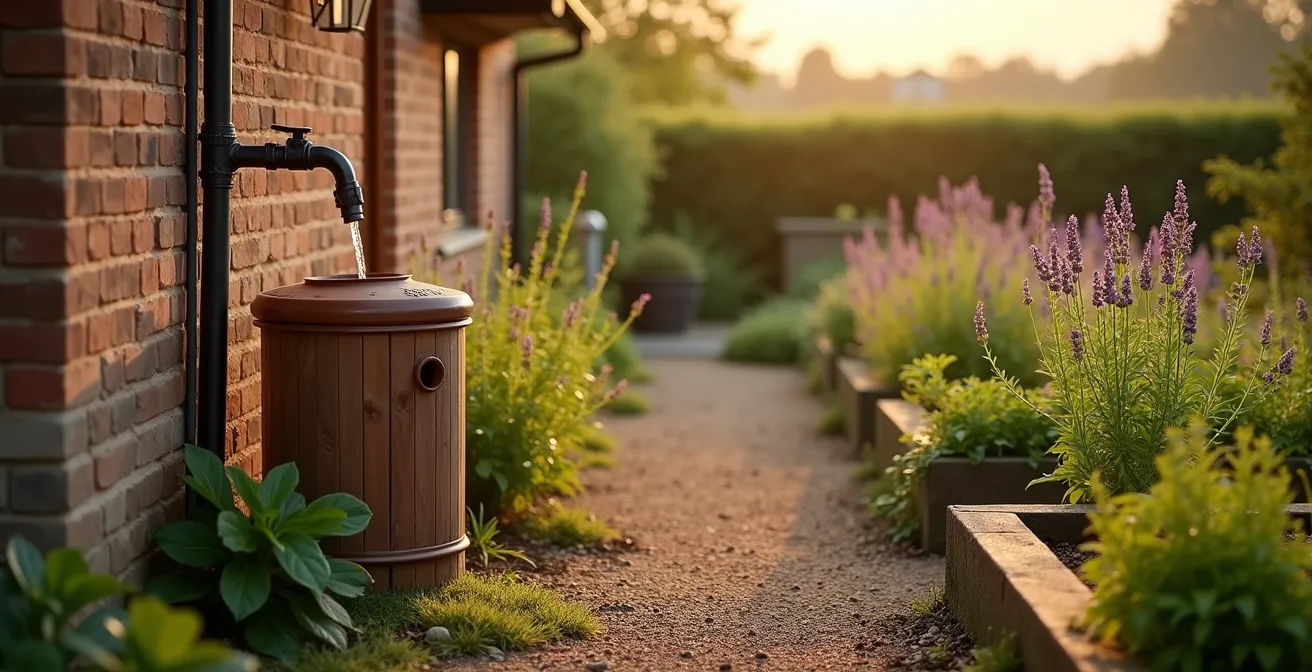
The fear of a £1,000 fine doesn’t mean your garden must perish; the key is not just avoiding the hosepipe, but understanding the specific legal exemptions and compliant watering systems available.
- Statutory exemptions exist for disabled persons via the Priority Services Register (PSR), which most gardeners are unaware of.
- Watering systems not connected to the mains, such as gravity-fed water butts or specific drip irrigation setups, are generally permitted.
- Using ‘greywater’ from baths or laundry is a legal and effective strategy, provided you follow safety protocols.
Recommendation: Shift your focus from simply ‘not watering’ to proactively implementing and documenting a legally compliant watering strategy using alternative sources and systems.
The familiar sight of a parched, brown lawn and wilting flowerbeds during a hot English summer is often accompanied by the formal notice of a Temporary Use Ban (TUB), or hosepipe ban. For dedicated gardeners, this brings a sense of dread, not just for their prized plants, but also due to the significant financial penalty looming; violations of hosepipe bans can result in fines up to a formidable £1,000. The common advice is to resort to the watering can and hope for the best, a labour-intensive and often inadequate solution for an established garden.
Many guides stop there, offering simple water conservation tips. However, from a legal and compliance standpoint, this surface-level advice overlooks a landscape of crucial details. The regulations are not a blanket prohibition on watering; they are a targeted restriction on using a hosepipe connected to the mains water supply for specific purposes. But what if the key to saving your garden wasn’t just about abandoning the hose, but about navigating a matrix of specific exemptions, compliant system designs, and alternative water sources that are often misunderstood or completely ignored?
This guide moves beyond the platitudes. We will dissect the rules from an environmental lawyer’s perspective, exploring the statutory exemptions you may be entitled to, the technical specifications of watering systems that are permitted during a ban, and the safe, legal methods for repurposing household water. It’s about shifting from a position of passive risk to one of proactive, defensible compliance.
text
This article provides a detailed breakdown of your legal options and practical strategies. Explore the sections below to build a resilient and compliant garden watering plan.
Summary: A Gardener’s Compliance Guide to Hosepipe Bans
- Are Blue Badge Holders Exempt from Hosepipe Bans in Your Area?
- How to Siphon Bath Water into the Garden Without Swallowing Soap?
- Is Drip Irrigation Allowed During a Ban if It Uses a Timer?
- The Snitch Culture: What to Do If a Neighbour Wrongly Reports You?
- How to Lock Moisture into Soil So You Only Need to Water Once a Week?
- How Much Water Can Your Shed Roof Actually Catch in a Downpour?
- How to Build a Safe Laundry-to-Landscape System for Summer Watering?
- How to Create a “Dry Garden” That Survives UK Winters?
Are Blue Badge Holders Exempt from Hosepipe Bans in Your Area?
One of the most significant yet under-publicised aspects of hosepipe ban regulations is the statutory exemption for individuals with disabilities. From a legal perspective, this is not a discretionary favour but a recognised necessity. Most UK water companies operate a Priority Services Register (PSR), a confidential database of customers who may need extra support due to age, ill health, or disability. Being on the PSR can, in many cases, provide a formal exemption from certain hosepipe ban restrictions. A Blue Badge is typically sufficient evidence to qualify for registration.
Crucially, this exemption is not automatic. You must proactively register with your specific water supplier. The scope of the exemption can also vary. For instance, Thames Water’s policy during a recent ban explicitly permitted registered PSR members to use a hose for watering gardens, cleaning vehicles, and maintaining paths. It is a formal, defensible position. The key is to check the specific policy of your local water authority, register in advance, and keep a record of your registration confirmation. This single administrative step can be the difference between legality and liability.
The table below, based on an analysis of various water company policies, illustrates how these exemptions are handled across England. Note the common requirement for PSR registration.
| Water Company | Blue Badge Exemption | Registration Required | Scope of Exemption |
|---|---|---|---|
| Thames Water | Yes | Priority Services Register | Garden watering, car washing, path cleaning |
| Southern Water | Yes | Priority Services Register | Essential garden access, limited hosepipe use |
| Yorkshire Water | Yes | Assessment required | Case-by-case evaluation |
| South East Water | Yes | PSR registration | Advisory before confirmation |
How to Siphon Bath Water into the Garden Without Swallowing Soap?
The law restricts water from the mains; it does not restrict the use of ‘greywater’—used water from baths, showers, and sinks. This provides a perfectly legal and sustainable source for keeping established plants alive. The challenge lies in moving it safely and efficiently. The most common method, the “bucket brigade,” is exhausting. A far better solution is a simple siphon, but the old method of starting it with your mouth is unhygienic and unpleasant. A modern, safe approach is essential.
To create a safe and effective system, you need clear plastic tubing and, crucially, a hand-pump primer. This small, inexpensive device, often used for siphoning fuel, uses a simple squeeze-bulb mechanism to start the water flow, completely eliminating any risk of mouth contact with soapy water. It’s a game-changer for greywater usability. When using this method, remember that greywater should be used on established ornamental plants, trees, and shrubs, not on edible crops like salads or root vegetables that are eaten raw. Furthermore, use the water within 24 hours to prevent bacteria from developing.
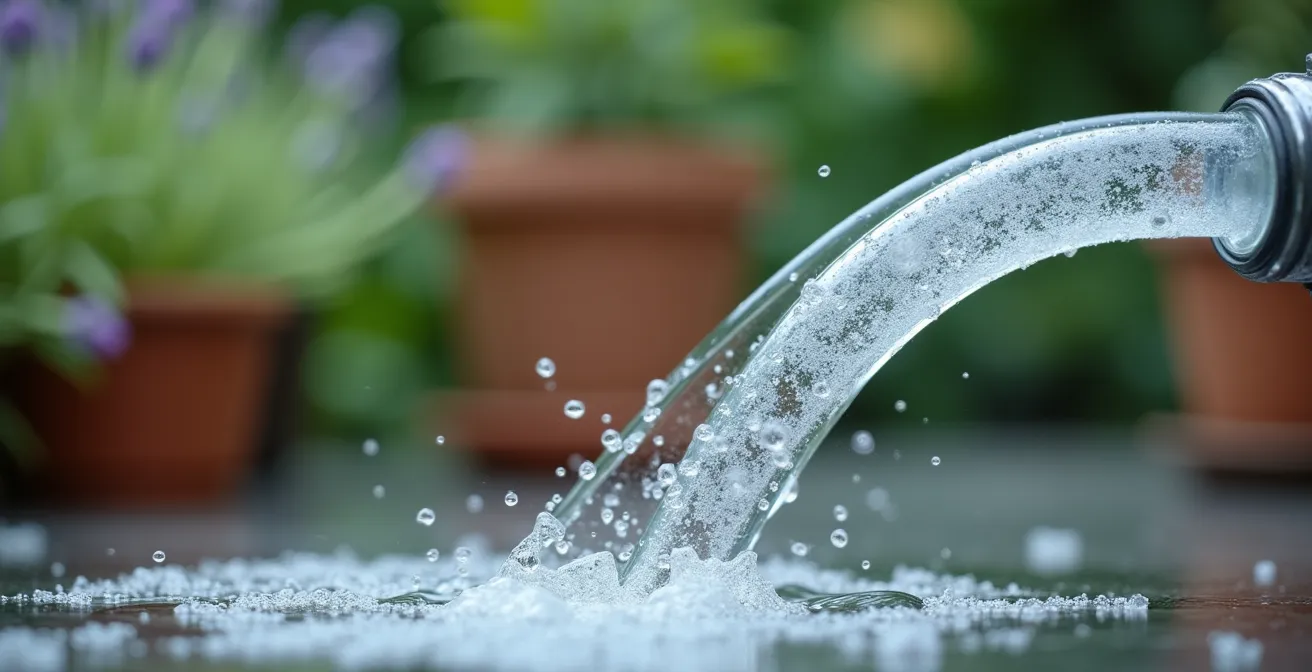
The process is straightforward: submerge one end of the tube in the bath, attach the primer to the other end, give it a few squeezes to start the flow, then remove the primer and direct the water to the base of your plants. By alternating greywater with any available rainwater, you also prevent the potential build-up of salts and soaps in the soil, maintaining a healthy garden ecosystem. This system is not just a workaround; it’s a demonstration of responsible water management.
Is Drip Irrigation Allowed During a Ban if It Uses a Timer?
This question reveals a critical legal distinction: the regulations ban the *use of a hosepipe for watering*, but they often provide specific exemptions for more efficient, targeted systems. A drip or soaker hose irrigation system is not legally equivalent to a standard garden hose with a spray gun. These systems are designed for water conservation, delivering water directly to the plant’s roots with minimal waste through evaporation or runoff. Because of this inherent efficiency, they are frequently exempt from Temporary Use Bans.
However, compliance often hinges on specific technical criteria. As demonstrated by South East Water during its 2025 ban, an exempt drip system typically must be fitted with a pressure-reducing valve and an automatic timer. It cannot be handheld. The timer is a key component from a compliance perspective, as it demonstrates the system is automated and not used indiscriminately. It’s a “systemic exemption”—the system’s very design makes it compliant. Furthermore, the ban only applies to mains-connected devices; a drip system fed by gravity from a water butt is always permitted.
The argument for adopting such a system is compelling. It’s not just about legal compliance; it’s about superior water efficiency. Studies show that well-designed drip irrigation systems can reduce water consumption by up to 70% compared to a traditional hosepipe or sprinkler. Investing in a compliant drip system is therefore not just a short-term tactic to survive a ban, but a long-term strategic investment in a more sustainable and resilient garden.
The Snitch Culture: What to Do If a Neighbour Wrongly Reports You?
During a hosepipe ban, neighbourhood tensions can rise, leading to a “snitch culture” where well-meaning but misinformed neighbours report any sign of garden watering. If you are using a legally compliant method—such as a water butt-fed soaker hose, a registered exempt hosepipe, or greywater—a wrongful report can be stressful. The key is not to panic, but to have a position of proactive, documented compliance. Your defence is built long before the complaint is ever made.
The first thing to understand is that a hosepipe ban violation is a civil matter, not a criminal offence. Water companies rarely pursue the maximum £1,000 fine for a first-time or disputed incident. Their first step is almost always to issue a warning letter. This is your opportunity to respond calmly and professionally. Your response should include the evidence you have already prepared: a copy of your Priority Services Register confirmation, photos of your rainwater harvesting setup showing it’s not connected to the mains, or receipts for your compliant drip irrigation system. Documentation is your strongest ally.
This is a proactive approach to garden management in a drought. Your setup should be transparently legal, making any complaint easy to dismiss.
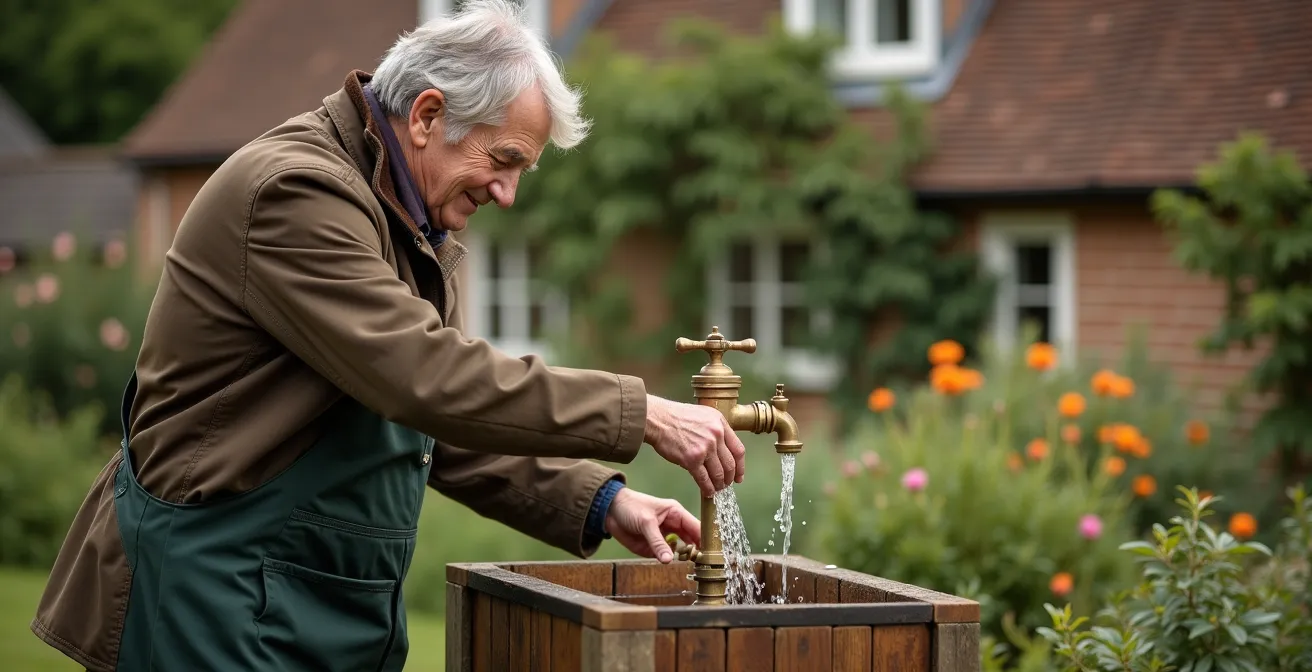
By maintaining clear records and using visibly compliant systems, you transform a potential dispute into a simple matter of clarification. You are not just watering your garden; you are doing so in a way that is demonstrably responsible and within the letter of the law. This approach neutralises the stress of potential complaints and solidifies your status as a responsible, informed gardener.
How to Lock Moisture into Soil So You Only Need to Water Once a Week?
The most effective watering strategy is one that minimises the need to water in the first place. The key to this is improving your soil’s ability to retain moisture. A layer of organic mulch spread over the soil surface acts like a lid on a pot, dramatically reducing evaporation from the sun and wind. This means that every drop of water—whether from a watering can, a drip system, or a downpour—goes further and lasts longer. A thick 5-7cm layer of mulch can reduce watering frequency by more than half.
The choice of mulch depends on your budget, aesthetic preference, and garden type. Composted bark is an excellent all-rounder for shrubs and borders, while specialised products like Strulch (mineralised straw) offer superb water retention for vegetable patches. The following table, based on a comparison of common UK mulches, provides a guide to their effectiveness.
| Mulch Type | Water Retention | Cost per m² | Best For | Lifespan |
|---|---|---|---|---|
| Strulch (mineralised straw) | Excellent | £8-10 | Vegetables, borders | 12 months |
| Composted Bark | Very Good | £5-7 | Shrubs, trees | 2-3 years |
| Wood Chippings | Good | £3-5 | Paths, large areas | 2-3 years |
| Wool Pellets | Excellent | £10-12 | Containers, veg | 6-8 months |
For a more advanced, subterranean solution, consider creating underground water reservoirs using ollas. This ancient technique involves burying unglazed terracotta pots in the soil, which then slowly seep water directly to plant roots. It’s an incredibly efficient, set-and-forget system.
Your Action Plan: Creating Underground Water Reservoirs with Ollas
- Purchase unglazed terracotta pots from garden centres (£5-15 each).
- Seal the drainage hole at the bottom of the pot with a piece of cork or waterproof silicone.
- Bury the pots up to their necks between your plants, spacing them roughly 60-90cm apart.
- Fill the ollas once a week with your collected rainwater or greywater.
- Cover the opening of each pot with its saucer or a flat stone to prevent evaporation and stop mosquitos from breeding.
How Much Water Can Your Shed Roof Actually Catch in a Downpour?
Gardeners often underestimate the immense potential of rainwater harvesting. It is not a marginal gain; it is a primary source of high-quality, free, and legally unrestricted water. The average UK house roof is a vast collection surface, but even a modest garden structure can yield a surprising amount. According to WaterUK, the average UK roof collects an astonishing 85,000 litres per year. While your shed won’t match this, the volume is far from trivial.
Let’s consider a concrete example. A standard 8ft x 6ft shed has a roof area of approximately 4.5 square metres. In a city like Birmingham, with an average annual rainfall of 750mm, that small roof can harvest over 3,300 litres of water annually. More importantly, during a single 10mm summer downpour, it will collect 45 litres—enough to fill two large watering cans and sustain ten thirsty tomato plants for a week. By installing a simple guttering kit (around £30-50) and connecting it to a 200-litre water butt, you can capture the output of most summer rain events, creating a significant buffer against drought.
For those with more space, a single water butt is just the beginning. You can create a large-capacity storage system by “daisy-chaining” multiple butts together. The principle is simple: as the first butt fills, its overflow pipe directs excess water into the next butt in the chain, and so on. This ensures that not a single drop from a heavy downpour is wasted. It is a closed-loop, gravity-fed system entirely separate from the mains, making its use completely outside the scope of any hosepipe ban.
- Install the first water butt on a stand at the highest point, connecting it to the downpipe with a diverter kit.
- Position the second butt on a slightly lower stand, typically 10-15cm below the first.
- Connect the overflow outlet of the first butt to the top inlet of the second butt using a linking kit.
- Ensure the linking pipe has a slight downward slope to allow gravity to do its work.
- Continue the chain with a third or fourth butt, each one slightly lower than the last.
How to Build a Safe Laundry-to-Landscape System for Summer Watering?
Beyond bath water, another consistent source of greywater is your washing machine. A typical laundry cycle uses between 40 and 60 litres of water, which can be safely diverted to your garden with the right approach. A “laundry-to-landscape” system is a formal way of describing this process, turning a waste product into a valuable resource during a drought. For homeowners, this can involve installing a simple three-way diverter valve on the washing machine’s outlet pipe, allowing you to switch the water flow between the drain and a hose leading to the garden.
For renters or those seeking a non-permanent solution, the “bucket brigade” remains the simplest option: simply direct the machine’s drainage hose into a large bucket or trug for manual transport. The crucial factor for any laundry-to-landscape system is the choice of detergent. Many conventional powders and liquids contain high levels of sodium, boron, and bleach, which are harmful to soil and plants over time. It is imperative to switch to plant-friendly, biodegradable, low-phosphate detergents. Brands like Ecover and Bio-D are widely available in UK supermarkets and are formulated to be safe for garden use.
As with bath water, laundry greywater should be directed to the root zone of established, non-edible plants and should never be stored for more than 24 hours. A simple gravel filter—made by drilling holes in a bucket and filling it with pea shingle—can help catch lint and sediment before the water reaches your garden, preventing soil clogging. By rotating the areas you water, you can prevent any potential build-up of minerals in one spot.
| Safe Products | Unsafe Products | Reason |
|---|---|---|
| Ecover, Bio-D | Fabric softeners | Contains harmful salts |
| Method, Faith in Nature | Chlorine bleach | Kills soil organisms |
| Soap nuts | Dishwasher salts | Excessive sodium |
| Castile soap | Biological powders | High enzyme content can be detrimental |
Key Takeaways
- Prioritise registration on your water company’s Priority Services Register if you hold a Blue Badge for a potential full exemption.
- Implement greywater systems for bath and laundry water, using plant-safe soaps and applying the water to ornamental plants only.
- Invest in compliant infrastructure like automatically timed drip irrigation and multi-butt rainwater harvesting systems that are legally outside the scope of a ban.
How to Create a “Dry Garden” That Survives UK Winters?
While the strategies above offer excellent ways to navigate a temporary ban, the ultimate long-term solution is to design a garden that is inherently less dependent on water. This is the principle behind “dry” or “drought-tolerant” gardening. It is a common misconception that this style is unsuited to the UK’s damp climate, suitable only for Mediterranean regions. The reality, as proven by pioneers like Beth Chatto in her famous Essex Gravel Garden, is that a dry garden can thrive in England by selecting plants that tolerate both summer drought and winter wet.
The core technique involves dramatically improving soil drainage by incorporating large amounts of horticultural grit and creating raised beds or mounds topped with gravel. This gravel mulch not only suppresses weeds and retains moisture in summer but also keeps plant crowns dry and rot-free during wet winters. The plant selection is key: focus on species with silvery or hairy leaves, which are natural adaptations to reduce water loss. Plants like Eryngium (Sea Holly), Verbena bonariensis, Sedum, and ornamental grasses like Stipa are perfect candidates. They establish deep root systems that can seek out moisture far below the surface, making them incredibly resilient once established.
Creating a dry garden is a strategic shift in mindset. It’s about working with nature, not against it, and choosing the right plant for the right place. An initial investment in soil preparation and plant selection will pay dividends for years to come, resulting in a beautiful, low-maintenance garden that is not only resistant to hosepipe bans but also beneficial for local wildlife and biodiversity. It moves your garden from a state of dependency to one of self-sufficient resilience.
By adopting these proactive and informed strategies, you can move from a position of anxiety to one of control, ensuring your garden not only survives but thrives, all while remaining fully compliant with the law. The next logical step is to audit your own garden and implement the most suitable solutions for your specific circumstances.
Frequently Asked Questions About Hosepipe Ban Compliance
What happens if someone reports me for using a hosepipe?
Water companies typically send a warning letter first before any site visits. They may question your exemption status if you’re on the Priority Services Register. Prosecution is considered a last resort for persistent offenders.
Is breaking a hosepipe ban a criminal offence?
No, it is a civil matter, not a criminal one. While you can be fined up to £1,000 under the Water Industry Act 1991, it does not result in a criminal record and is rarely pursued to the maximum extent for first-time or disputed violations.
How can I prove I’m using legal watering methods?
Keep a clear record. Take photos of your water butt and gravity-fed system, keep receipts for any compliant drip irrigation equipment you purchase, and have a digital or physical copy of your Priority Services Register confirmation if you are registered.