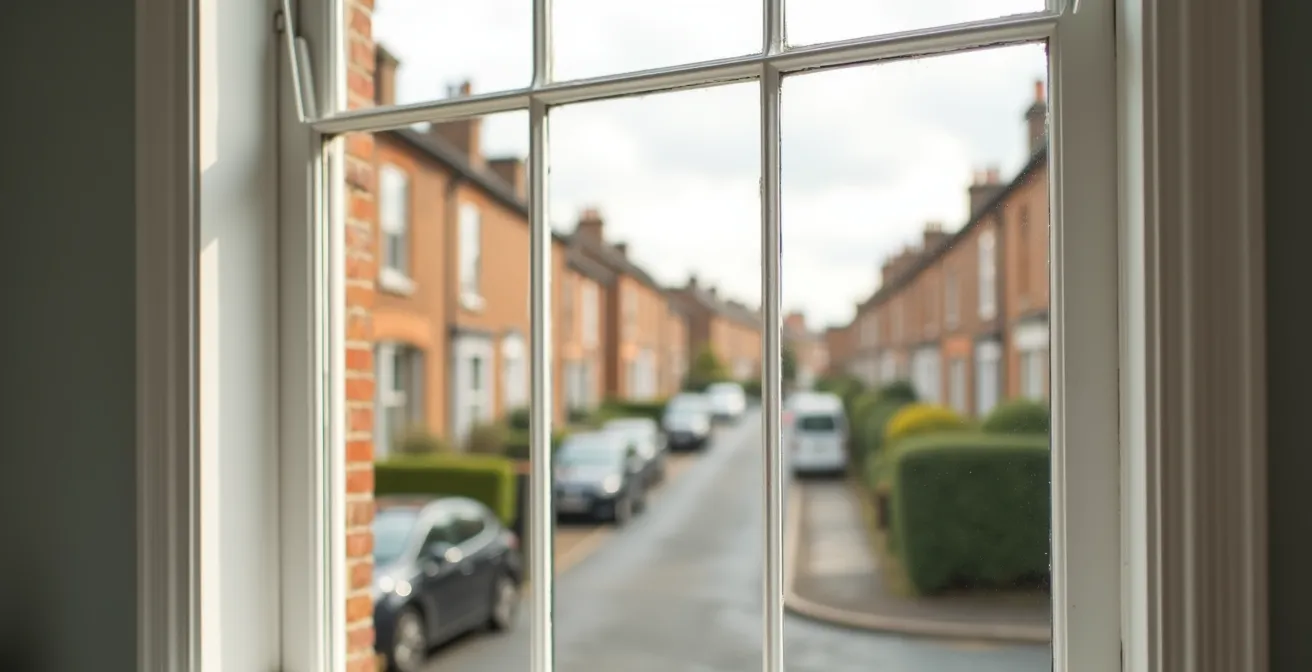
For urban properties with window restrictions, secondary glazing often provides superior noise reduction to standard double glazing, not as a budget alternative, but through better acoustic science.
- A wide air gap (100mm+) decouples glass panes, disrupting low-frequency traffic noise more effectively than the small gap in sealed double-glazed units.
- It’s a reversible, non-invasive upgrade, making it ideal for listed buildings and conservation areas where original windows must be preserved.
Recommendation: Before considering costly window replacement, assess the potential of a well-specified secondary glazing system to solve your noise and thermal comfort issues.
Living in a characterful urban flat often means accepting a compromise: the charm of period features in exchange for the constant intrusion of traffic noise and winter chills. For many, the default solution seems to be replacing old single-glazed windows with modern double glazing. But what if you’re in a listed building or conservation area where such changes are forbidden? Or what if, counter-intuitively, standard double glazing isn’t even the best solution for the low-frequency rumble of a busy road?
The conventional wisdom pits double glazing as the premium, modern choice, with secondary glazing seen as a lesser, temporary fix. This view misses a crucial point of physics. The battle against noise isn’t just about adding more glass; it’s about creating an environment of quiet comfort by managing sound vibrations effectively. This requires understanding the science of acoustic decoupling, a principle where two separated surfaces vibrate independently, stopping sound in its tracks.
This is where a well-designed secondary glazing system truly excels. By creating a significantly wider air gap than is possible with a sealed double-glazed unit, it offers a more robust defence against the specific types of noise that plague city dwellers. This article will deconstruct the science behind acoustic performance, guiding you through why mastering the air gap is more important than simply replacing your windows. We will explore practical, high-performance solutions that enhance your home’s thermal envelope and restore tranquillity, all while respecting the integrity of your property.
This guide breaks down the critical factors that make secondary glazing a superior acoustic choice in many urban scenarios. We will cover everything from the underlying science to material selection and practical installation, providing a clear path to a quieter, more comfortable home.
Summary: Unlocking Quiet Comfort with Secondary Glazing
- Why Does a 100mm Air Gap Kill Traffic Noise Better Than 20mm?
- How to Install Magnetic Secondary Glazing for Under £100 per Window?
- Glass vs Acrylic: Which Material Is Clearer and More Scratch Resistant?
- The Secondary Glazing Trap: How to Prevent Mist Forming Between Layers?
- Sliding vs Lift-Out: Which System Is Easier to Live With Daily?
- Where to Position Your Heat Pump to Avoid Annoying the Neighbours?
- Why Do Your Sash Windows Drop When You Try to Open Them?
- How to Stop Sash Windows Rattling and Leaking Heat Without Replacing Them?
Why Does a 100mm Air Gap Kill Traffic Noise Better Than 20mm?
The primary reason secondary glazing can outperform standard double glazing for noise reduction lies in a principle called acoustic decoupling. Imagine trying to stop a drum’s vibration with your hand. If you touch it lightly, the vibration still travels through. But if you hold your hand an inch away, the air between you and the drumskin acts as a buffer. The same logic applies to windows. Standard double glazing has a small, sealed air or gas-filled gap, typically 16-20mm wide. While excellent for thermal insulation, this small gap can cause the two panes of glass to vibrate in sympathy with each other, especially at low frequencies like traffic rumble. This is known as resonant frequency, where the unit itself can amplify certain sounds.
A secondary glazing system allows for a much larger air gap, often 100mm or more. This significant separation ensures the two panes of glass are fully decoupled. The outer pane takes the initial hit from the sound wave, and the large pocket of air dissipates that energy before it can reach the inner pane. This is particularly effective against low-frequency noise. In fact, with the right specification, secondary glazing can achieve a staggering reduction of up to 50 decibels, turning the roar of a main road into a distant hum.
For optimal performance against traffic noise, experts recommend an air gap of at least 100-150mm. Using different thicknesses of glass for the primary and secondary pane further enhances this effect, as each pane will have a different resonant frequency, preventing them from vibrating in unison. It’s this intelligent use of space and materials, rather than just brute force, that creates a truly peaceful indoor environment.
How to Install Magnetic Secondary Glazing for Under £100 per Window?
Achieving high-performance soundproofing doesn’t have to involve professional installers and significant expense. Modern magnetic secondary glazing kits offer a remarkably effective DIY solution that is both affordable and perfectly suited to renters or owners in listed buildings. The principle is simple: a self-adhesive magnetic tape is applied to your existing window frame, and a corresponding tape is fixed to a custom-cut acrylic or polycarbonate panel. The panel then snaps securely into place, creating an airtight seal.
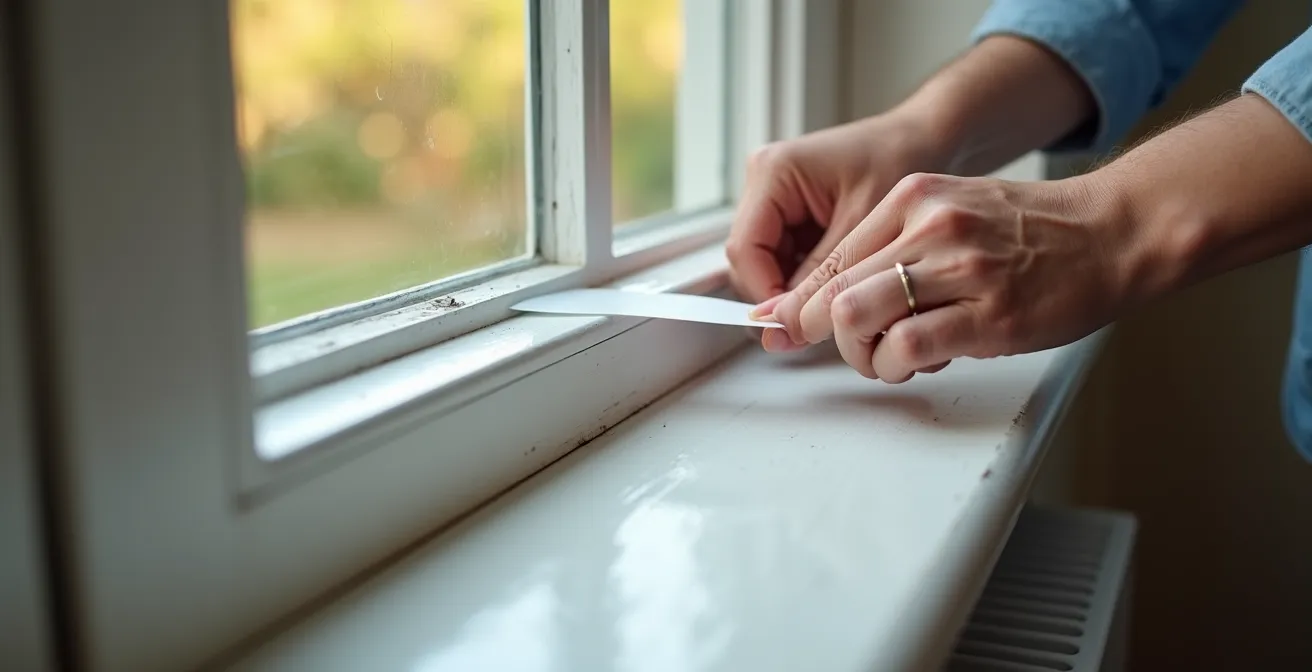
This approach has several key benefits for urban flats. Firstly, the cost is minimal; according to industry suppliers, the materials for a DIY magnetic system can cost as little as £50-£100 per square metre. Secondly, it’s completely reversible, leaving no marks or damage on the original frames—a critical requirement for heritage properties. Finally, it’s a project that can be completed in an afternoon with basic tools. The key to success is precise measurement and ensuring the frames are clean and dry before applying the tape to achieve a perfect seal, eliminating any flanking noise from air gaps.
Case Study: Grade II Listed Building Transformation
The effectiveness of this approach was demonstrated when Arctic Glaze fitted secondary glazing to three large windows in a Grade II listed building. The owner, who was prohibited from replacing the original windows, reported an immediate and noticeable ‘difference with the temperature and a reduction in traffic noise’ after installation. This shows that a well-executed DIY-style system can deliver professional-level results, solving the twin problems of noise and heat loss even in the most protected properties.
Glass vs Acrylic: Which Material Is Clearer and More Scratch Resistant?
When specifying a secondary glazing system, the choice of panel material is a critical decision that impacts acoustic performance, durability, safety, and cost. While traditional glass is an option, modern plastics like acrylic (often known by brand names like Perspex) offer a compelling balance of properties for residential use. Glass is highly scratch-resistant and offers an authentic look for listed buildings, but it’s heavy and shatters on impact. Acrylic, by contrast, is much lighter, safer, and has superior optical clarity, transmitting more light than glass.
For ultimate acoustic performance, however, the gold standard is laminated acoustic glass. This consists of two sheets of glass bonded together with a Polyvinyl Butyral (PVB) interlayer. This soft layer acts as a powerful sound dampener, specifically targeting the frequencies of human speech and traffic noise. The following table, based on guidance from industry leaders, compares the options:
| Material | Sound Reduction | Durability | Cost | Best Use Case |
|---|---|---|---|---|
| Standard Glass 4mm | Basic | High – scratch resistant | £ | Listed buildings requiring authenticity |
| Acrylic/Perspex | Good | Medium – UV inhibitors prevent yellowing | ££ | Family homes, safety priority |
| Laminated Acoustic Glass with PVB | Superior – targets specific frequencies | Highest – shatter resistant | £££ | Properties near airports, motorways |
As the experts at Guardian Glass explain, the real magic of laminated glass is in how it manages sound energy. Their technical team notes the following:
Laminated glass increases the sound insulation by decoupling the glass panes and damping the vibrations generated by the sound waves
– Guardian Glass Technical Team, Guardian Glass Acoustic Solutions Guide
For most urban flats dealing with traffic noise, a high-quality, thick acrylic (6mm+) offers an excellent blend of cost, safety, and acoustic insulation. However, for those on a flight path or next to a motorway, investing in laminated glass will deliver a transformative level of quiet.
The Secondary Glazing Trap: How to Prevent Mist Forming Between Layers?
One of the most common fears about secondary glazing is condensation, or “misting,” appearing in the cavity between the new panel and the original window. Understanding why this happens is key to preventing it and ensuring a crystal-clear view. The culprit is almost always warm, moist air from inside your home finding its way into the air gap. When this humid air hits the cold surface of the outer primary window, it cools, and the moisture condenses into visible droplets—the dew point is reached inside the cavity.

The solution lies in creating a near-perfect airtight seal on the inner secondary panel. This is the most critical aspect of the installation. For magnetic systems, this means ensuring the tape makes full, uninterrupted contact with the frame. For permanent systems, it involves meticulous application of silicone sealant. Counter-intuitively, you want the outer primary window to be slightly “leaky” to the outside. This allows any minuscule amount of moisture that does get in to ventilate away. If your primary windows have trickle vents, they should be left open to the outside.
Interestingly, seeing condensation on the external face of your primary window on a cold morning is actually a good sign. It proves that your secondary glazing is working effectively as a thermal barrier. It’s keeping the heat inside your room, meaning the outer pane of glass is cold enough for external dew to form on it. The only bad condensation is condensation *between* the panes. If you do encounter this, it’s a sign your inner seal isn’t quite perfect and needs to be checked and improved.
Sliding vs Lift-Out: Which System Is Easier to Live With Daily?
Once you’ve decided on the material and air gap, the final practical consideration is the operating system. This choice will define your daily interaction with the windows for cleaning, ventilation, and access. The two most common types for DIY and professional installs are lift-out panels and sliding systems. Lift-out panels, often used with magnetic seals, are the simplest. They are single panels that you physically remove from the frame and set aside. While offering the best possible seal and acoustic performance when in place, they can be cumbersome. For a large sash window, a 6mm acrylic panel can be heavy and requires storage space when not in use.
Sliding systems, which come in horizontal or vertical configurations, offer far greater convenience. They consist of two or more panels set in an outer frame, allowing you to slide one panel over the other for easy ventilation. This is ideal for windows you open daily, like in a kitchen or living room. Vertical sliders are particularly well-suited to preserving the functionality and aesthetic of traditional sash windows. However, this convenience comes at a slightly higher cost and a minor trade-off in acoustic sealing compared to a single, perfectly sealed lift-out panel. The choice ultimately depends on how you use the window.
Action Plan: Choosing Your Glazing System
- Assess Storage: Before committing to lift-outs, measure your available storage space. Can you safely store a large, heavy panel?
- Match to Use: Use lift-outs for rarely opened windows (e.g., a bedroom sash in winter) and sliding systems for high-traffic windows like casements.
- Consider Panel Weight: For large bay windows, lift-out panels may require two people to handle safely. A hinged or sliding system might be more practical.
- Plan for Cleaning: Hinged systems, which open inwards like a door, offer the easiest access for cleaning both the primary and secondary panes.
- Budget for Aesthetics: If perfectly matching the look of a sash window is paramount, budget for a bespoke vertical sliding system, which offers the best functional and visual match.
While DIY options are cost-effective, professional installation offers guaranteed performance. As a guide, MyBuilder reports that professional secondary glazing costs typically range from £300 to £500 per window, depending on the system and size.
Where to Position Your Heat Pump to Avoid Annoying the Neighbours?
While creating a tranquil home involves managing external noise sources like traffic, it also means being a considerate neighbour. The placement of equipment like air source heat pumps is a common source of acoustic concern, as their fans can generate persistent, low-frequency noise. Although a detailed guide to heat pump installation is beyond the scope of this article on window acoustics, the core principle is the same: managing sound at its source and along its path. Current UK planning guidance focuses on the decibel level at the property boundary rather than a fixed distance, emphasising the need for careful acoustic assessment.
Ultimately, a holistic approach to home comfort considers both blocking external noise and containing internal or property-generated noise. However, the most significant and immediate improvement for urban residents is almost always found by addressing the weakest point in the building’s acoustic defence: the windows. By creating a robust thermal and acoustic envelope with well-specified secondary glazing, you tackle the primary source of discomfort first.
Why Do Your Sash Windows Drop When You Try to Open Them?
Before you can effectively soundproof an old window, you must ensure the window itself is in good working order. This is especially true for traditional timber sash windows. If you open a sash window part-way and it immediately drops shut, this is a classic sign that the sash cords have failed. Inside the window frame, the timber sash is connected via a cord to a set of cast-iron counterweights. These weights are what make the window feel light and stay open at any position. When the cotton cords fray and snap with age, the sash is no longer supported and becomes dangerously heavy and inoperable.
Attempting to install secondary glazing over a broken sash window is a mistake. The primary window must be functional, not just for ventilation but for fire escape regulations. A pre-installation audit is essential. Slide both the top and bottom sashes to check for smooth movement. Listen for grinding noises from the pulleys and feel for any sticking or jarring. If the sashes don’t stay put when released, the cords and potentially the weights need professional attention from a joiner.
Fixing these mechanical issues is the non-negotiable first step. Only once the primary window is fully repaired, balanced, and operating smoothly can you begin to address the next layer of comfort: eliminating the rattles and draughts that also compromise acoustic and thermal performance. This creates a solid, stable foundation for your secondary glazing to be installed upon.
Key Takeaways
- Acoustic Decoupling: A wide air gap (100mm+) is more effective at blocking low-frequency traffic noise than the narrow gap in standard double glazing.
- Reversible Solution: Magnetic and lift-out secondary glazing systems are ideal for listed buildings as they require no permanent alteration to original frames.
- Sealing is Critical: The effectiveness of any system depends on creating a perfect airtight seal on the inner pane to prevent condensation and flanking noise.
How to Stop Sash Windows Rattling and Leaking Heat Without Replacing Them?
With your sash windows now mechanically sound, the final step before adding secondary glazing is to address the persistent rattles and heat-leaking draughts. Over the years, timber frames shrink and warp, creating small gaps that let in cold air and allow the sashes to vibrate noisily in the wind. This not only makes a room uncomfortable but also undermines any attempt at soundproofing. Eliminating these gaps is one of the most cost-effective upgrades you can make to a period property.
The solution is professional draught-proofing. A specialist will rout discreet grooves into the timber stiles and rails of the sashes and fit them with brush or compression seals. This process creates a snug fit, instantly stopping rattles and drastically reducing air infiltration. This step alone can make a room feel significantly warmer and quieter. When you then combine comprehensive draught-proofing with a well-sealed secondary glazing system, you create a powerful, dual-barrier solution. The draught-proofing tackles air leakage, while the secondary glazing provides the high-level acoustic and thermal insulation.
This combined approach offers performance that can exceed that of a full window replacement, at a fraction of the cost and with no planning permission required, even for listed buildings. According to The Eco Experts, a typical three-bedroom house could cost around £3,600 for a full secondary glazing installation, a sound investment for long-term comfort.
The table below outlines how this combined solution compares to other common upgrades.
| Solution | Cost | Noise Reduction | Heat Retention | Planning Permission |
|---|---|---|---|---|
| DIY Brush Strips | £30 | Minimal | Basic | Not required |
| Professional Draught-proofing | £300+ | Good | Good | Not required |
| Secondary Glazing + Draught-proofing | £400-600/window | Excellent (up to 54dB) | Excellent | Not required for Listed Buildings |
By understanding and applying these principles, you can transform your home into a sanctuary of warmth and quiet, enhancing its comfort and value without compromising its historic character. The next logical step is to conduct a simple audit of your own windows to identify the best path forward for your specific situation.