
In summary:
- Determine if you require a G98 (automatic) or G99 (manual) DNO permission based on your system’s size before installation.
- You can switch SEG export providers independently, without altering your primary import supplier contract.
- Choose between fixed-rate export tariffs for predictable income or variable-rate tariffs for potentially higher, timed earnings.
- Activating payments requires securing an Export MPAN from your supplier, a critical step in the administrative process.
The installation of solar panels on your property marks a significant step towards energy independence. The immediate satisfaction of generating your own clean electricity, however, is often followed by a period of administrative uncertainty. The primary question becomes: how does one transition from being a producer of energy to being compensated for the excess that is fed back into the National Grid? The Smart Export Guarantee (SEG) is the designated mechanism for this, yet the path to receiving payments is rarely a straightforward ‘switch-on’ process.
Many new solar owners are advised to simply “get a smart meter” and “sign up for an SEG tariff.” While factually correct, this advice omits the critical procedural steps that precede revenue activation. It overlooks the labyrinth of Distribution Network Operator (DNO) permissions, the nuances of export limitations, and the generation of a unique Meter Point Administration Number (MPAN) for your export activities. This lack of clarity creates administrative friction, leading to delays and frustration.
This guide departs from superficial advice. We will treat the journey to SEG payment as a formal administrative procedure. The key is not merely knowing that you need documents, but understanding the specific sequence of operations and the purpose of each checkpoint in your compliance dossier. By demystifying the bureaucracy, you can navigate the system efficiently and ensure your solar investment begins generating financial returns without unnecessary delay.
This article provides a procedural breakdown of the essential administrative checkpoints you must clear to activate your SEG payments. The following sections detail everything from initial grid permissions to advanced revenue strategies, forming a comprehensive manual for the diligent solar owner.
Summary: Your Procedural Manual for Activating SEG Payments
- G98 vs G99: Which Grid Permission Do You Need for Your System?
- How to Switch to a SEG Tariff Without Changing Your Import Supplier?
- Fixed 15p or Variable Agile Outgoing: Which Export Tariff Pays More?
- The Export Limitation Trap: Why Is Your Inverter Throttling Output?
- Do You Need a Separate MPAN to Export Solar Energy?
- AC vs DC Coupling: Which Battery Setup Suits an Existing Solar Array?
- How Long Does a Standard 4kW Solar Installation Take to Install?
- How to Earn Money by Turning Off Your Appliances During Demand Service Events?
G98 vs G99: Which Grid Permission Do You Need for Your System?
Before any electricity can be exported, your system must be officially sanctioned by your regional Distribution Network Operator (DNO). This is the first and most critical administrative checkpoint. The type of permission required, either G98 or G99, is determined by your system’s maximum generation capacity. For most standard residential installations in the UK, the threshold is 3.68kW per phase. Systems at or below this capacity fall under the G98 notification process. This is a simplified procedure where your MCS-certified installer notifies the DNO of the connection within 28 days of commissioning. It is effectively a declaration, not a request for approval.
Conversely, systems exceeding 3.68kW per phase, or any system with a battery that can export, require a G99 application. This is a more complex process that must be completed and approved before the system is installed. It involves submitting a detailed application, including technical specifications and site plans, for the DNO to assess the potential impact on the local grid. This pre-approval is mandatory to avoid non-compliance. The timelines for this process are significant; while simpler applications may take weeks, recent data shows G99 applications for larger systems are taking between 45 and 90 days for approval. Factoring this into your project timeline is essential to prevent costly delays between installation and commissioning.
Action Plan: G99 Application Checklist for Homeowners
- Gather Documentation: Collate your MCS certificate from your installer and all related technical documentation for your planned system.
- Complete G99 Form: Accurately fill out the official G99 application form, paying close attention to the technical specifications of the inverter and panels.
- Include Supporting Files: Attach all required supplementary documents, such as site plans showing the equipment location and a signed letter of authority.
- Submit in Advance: Lodge the completed application with your DNO at least 10-45 working days before your planned installation date to allow for processing.
- Follow-Up: If no response is received within the statutory 45-day period, contact the assigned DNO project manager for a status update on your application.
Misunderstanding the G98/G99 distinction is a common source of administrative friction. Ensure you and your installer confirm the correct procedure for your specific system size to establish a compliant foundation for your SEG application.
How to Switch to a SEG Tariff Without Changing Your Import Supplier?
A frequent point of confusion for new solar owners is the relationship between their electricity import supplier and their export tariff provider. It is a common misconception that both services must be handled by the same company. However, the regulatory framework in the UK is designed to separate these two functions. You have the freedom to choose one company to supply your home with electricity and a completely different, licensed SEG provider to purchase your exported solar energy. This unbundling allows you to shop for the most competitive import tariff and the highest-paying export tariff independently.
This process is an established administrative procedure. When you sign up with a new SEG provider, they initiate the switch. They will contact your old SEG provider (if you have one) to manage the transition. As an example, the process with British Gas clarifies that upon notification from your new provider, they will request a final export meter reading from you. Following this, a final payment is issued and your old SEG account is formally closed. The setup of the new account typically takes up to four weeks, after which your revenue activation with the new provider is complete.

The key takeaway is that your export contract is a distinct commercial agreement. You are not locked into your import supplier’s potentially uncompetitive SEG rate. This freedom to choose is a fundamental aspect of the market, allowing you to maximise the financial return from your solar array by securing the best possible rate for the energy you provide to the grid.
Fixed 15p or Variable Agile Outgoing: Which Export Tariff Pays More?
Once you are cleared to export, the next procedural decision involves selecting the type of SEG tariff. The choice broadly falls into two categories: fixed-rate tariffs and variable (or ‘agile’) tariffs. A fixed-rate tariff offers simplicity and predictability. You are paid a constant price, such as 15p, for every kilowatt-hour (kWh) you export, regardless of the time of day or wholesale energy market fluctuations. This is the “set-and-forget” option, providing a stable, albeit potentially lower, revenue stream.
Variable tariffs, in contrast, link your export payments to the half-hourly wholesale price of electricity. This introduces both risk and opportunity. When demand is high and supply is low (e.g., early evenings), the price per kWh can be significantly higher than any fixed rate. Conversely, when there is an oversupply of renewables on the grid (e.g., a sunny, windy afternoon), prices can drop dramatically and even become negative. As this comparative analysis demonstrates, the choice depends heavily on your appetite for risk and your ability to manage your energy.
| Tariff Type | Rate | Best For | Risk Level |
|---|---|---|---|
| Outgoing Fixed | 15p/kWh | Set-and-forget simplicity | Low |
| Outgoing Agile | 0-93p/kWh variable | Battery owners who can time exports | Medium-High |
| Standard SEG | 4.1p/kWh | Non-Octopus customers | Low |
A variable tariff is best suited for households with a home battery storage system. This allows you to store solar energy generated during low-price periods and export it strategically when wholesale prices peak, maximising your earnings. The potential upside is considerable, but it requires active management. It’s also worth noting the phenomenon of ‘plunge pricing’; an analysis of Octopus Energy’s Agile tariff found that for 1.6% of the time between July 2023 and June 2024, customers were actually paid to use electricity due to grid oversupply. This highlights the dynamic nature of variable tariffs. The decision is therefore a strategic one: predictable income versus potentially higher, actively managed revenue.
The Export Limitation Trap: Why Is Your Inverter Throttling Output?
A frustrating scenario for some new solar owners is discovering that their system is producing less power than its theoretical maximum, particularly on bright, sunny days. This phenomenon, known as export limitation or ‘throttling’, is often not a fault with the equipment but a pre-emptive restriction imposed by the DNO. This occurs when the local grid infrastructure has limited capacity to absorb new generation. To prevent overloading, the DNO may grant G99 permission with a condition that your system’s export is capped at a certain level, for instance, 3.68kW, even if your panels are capable of producing 5kW.
This is not a rare occurrence; data from Deege Solar shows that approximately 10% of solar DNO applications are approved with some form of export limitation. The inverter is programmed to comply with this limit, automatically reducing its output once the export ceiling is reached. This means that on a perfect solar day, you could be losing out on generating, using, and exporting a significant amount of free energy. It is a hidden administrative trap that can impact the financial viability of a larger system if not anticipated.
Your Audit Plan: Troubleshooting Export Limitation
- Confirm DNO Conditions: Check your G99 approval documents to see if a G100 Export Limitation Scheme has been applied to your system.
- Review Inverter Settings: Ask your installer to verify that no manual export limits have been incorrectly configured in your inverter’s software.
- Verify System Capacity: Ensure the actual export capacity of your system as installed matches the capacity approved by the DNO.
- Monitor Export Patterns: Use your monitoring app to track export levels over a 24-hour period to identify specific times when throttling occurs.
- Appeal Limitation: If you believe the limit is unjustified, contact your DNO with 12 months of household consumption data to formally appeal the restriction.
The best mitigation is to be aware of this possibility during the G99 application phase. If a limitation is imposed, investing in a home battery becomes even more strategic. A battery allows you to capture all the energy your panels produce, even when your export is capped. You can then use that stored energy later, bypassing the limitation and ensuring no generated watt is wasted.
Do You Need a Separate MPAN to Export Solar Energy?
The Meter Point Administration Number (MPAN) is a fundamental piece of the UK energy system’s administrative architecture. Every property connected to the grid has an import MPAN, a unique 13-digit reference for the electricity you consume. What is less understood is that to get paid for exporting energy, you require a second, entirely separate Export MPAN. This number uniquely identifies your property as a generation point feeding electricity back into the grid. You cannot be paid under the SEG scheme without one.
The generation of this Export MPAN is not an automatic process. It is a key administrative step that you, the homeowner, must initiate after your system is commissioned. The procedure is as follows: once you have chosen your SEG provider and submitted your application (including your MCS certificate and DNO acceptance letter), that provider contacts the National Grid. The National Grid then instructs your regional DNO to create the Export MPAN and assign it to your property. This number is then registered on the central database, allowing your supplier to track your exported energy and process payments.
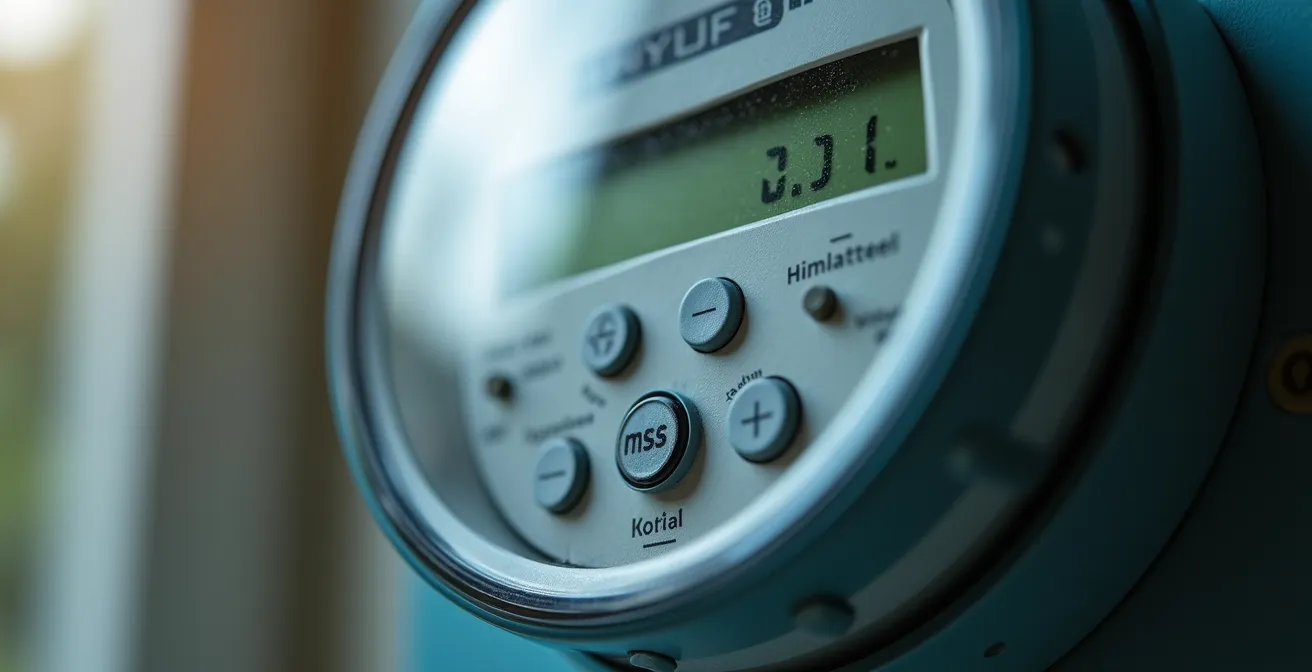
This process typically takes between one and four weeks from the point of your SEG application. Delays in this stage are a common source of frustration and are often the final hurdle before revenue activation. It is crucial to have all your paperwork—your “compliance dossier”—in order to ensure your SEG provider can request the MPAN without issue. Without this unique identifier, your smart meter’s export readings cannot be officially logged for payment, effectively leaving your exported energy unmonetised.
AC vs DC Coupling: Which Battery Setup Suits an Existing Solar Array?
For homeowners looking to add battery storage to an existing solar panel system, a key technical and administrative decision is whether to use an AC-coupled or DC-coupled setup. The choice has implications for efficiency, cost, and compatibility, particularly with older systems. A DC-coupled system connects the battery directly to the solar panels before the inverter. This is highly efficient but often requires a new, compatible hybrid inverter, making it better suited for brand-new installations.
An AC-coupled battery system, however, is the standard and most straightforward solution for retrofitting. It uses its own inverter and connects to your home’s electrical system on the ‘AC’ side (after your existing solar inverter). This makes it universally compatible with any pre-existing solar panel array, as it operates independently. While there is a slight efficiency loss due to converting power from DC (panels) to AC (solar inverter) and back to DC (battery inverter), its ease of installation and lower cost for retrofits make it the default choice.
| Coupling Type | Round-Trip Efficiency | Best For SEG | Installation Cost |
|---|---|---|---|
| AC Coupling | 85-90% | Retrofit to existing systems | Lower for retrofits |
| DC Coupling | 95-98% | New installations | Lower for new builds |
This is particularly relevant for UK owners of older systems who are still receiving payments under the now-closed Feed-in Tariff (FIT) scheme. According to guidance from the Energy Saving Trust, you cannot receive both FIT export payments and SEG payments simultaneously. However, by installing an AC-coupled battery, you can opt-out of the FIT export tariff, switch to a higher-paying SEG tariff for your battery exports, and crucially, continue to receive your original FIT generation payments. This creates a hybrid revenue model that leverages the best of both schemes.
How Long Does a Standard 4kW Solar Installation Take to Install?
When considering the timeline for a solar project, it is essential to distinguish between the physical installation and the full administrative process for revenue activation. The physical installation of a standard 4kW solar array on a typical UK home is remarkably swift. A competent, MCS-certified team can usually complete the entire process—including mounting the panels, running the wiring, and installing the inverter—in just one to two working days. Scaffolding may be erected a day before and dismantled a day after, but the core work is highly efficient.
However, this speed is misleading if your goal is to get paid for exported energy. The “installation” of your system within the energy market’s administrative framework takes significantly longer. This is the timeline that truly matters for your return on investment. As established, the first potential delay is the G99 DNO application, which can take anywhere from 8 to 12 weeks for approval before work can even begin. After the physical installation and commissioning, you must then apply to your chosen SEG provider.
The final administrative leg involves the generation of your Export MPAN and the setup of your SEG account. This part of the process can take another two to four weeks after your provider has all the necessary documentation. Therefore, a more realistic timeline from signing a contract for a G99-required system to receiving your first SEG payment is not a few days, but closer to three to five months. This procedural duration is a normal part of the process, and understanding it sets realistic expectations and prevents undue concern over perceived delays.
Key takeaways
- DNO permission (G98/G99) is a non-negotiable first administrative checkpoint that dictates your project timeline.
- Your choice of export tariff (fixed vs. variable) is a core strategic decision that dictates your earning potential and management style.
- Administrative delays in DNO approval and MPAN generation are a standard part of the process; diligent tracking is essential.
How to Earn Money by Turning Off Your Appliances During Demand Service Events?
Beyond the consistent revenue stream from the Smart Export Guarantee, an additional, more dynamic earning opportunity exists for UK households: the Demand Flexibility Service (DFS). This National Grid initiative is designed to help balance the grid during peak demand periods, typically on cold winter evenings. It operates separately from SEG and offers a different way to monetise your energy setup. Instead of paying you for exporting energy, DFS pays you for reducing your consumption compared to your typical usage during specific, pre-announced “events”.
Participation requires a smart meter capable of providing half-hourly readings. You can register for the service through your energy supplier or a third-party app. When the National Grid anticipates a spike in demand, they will announce a DFS event, usually for a one-hour window. During this time, you are financially rewarded for every unit of electricity you *don’t* use. For a solar and battery owner, this creates a powerful synergy. You can configure your system to not only reduce consumption from the grid by running your home from the battery, but also to actively export to the grid during the event to earn SEG payments simultaneously (if on a variable tariff where prices are also likely to be high).
Maximising revenue from both schemes involves a coordinated strategy. First, ensure you are signed up for both a suitable SEG tariff and the DFS. When a DFS event is announced, your primary goal is to minimise your import from the grid by using your stored battery energy. At the same time, if you are on a variable export tariff, you can discharge any excess battery capacity to the grid to take advantage of the high wholesale prices that often accompany these peak demand events. This two-pronged approach turns a grid stability problem into a significant revenue opportunity for the savvy homeowner.
This represents an advanced level of system optimisation, turning your home from a passive generator into an active participant in national grid balancing, with corresponding financial rewards.
To put these procedural insights into practice, the logical next step is to conduct a formal assessment of your property’s specific requirements and begin compiling your compliance dossier for the DNO application.
Frequently Asked Questions about How to Get Paid for Your Excess Solar Energy via the Smart Export Guarantee?
Who generates my Export MPAN?
Your export tariff supplier contacts your Distribution Network Operator (DNO), which runs the hardware supplying electricity to your region. The DNO provides your property with an export MPAN – a unique 13-digit number identifying your electricity meter. This usually takes between one and four weeks.
What if my installer has gone out of business?
You can obtain necessary documentation like the MCS certificate yourself by contacting MCS directly with your installation details. This ensures you can still compile the required compliance dossier for your SEG application.
Why is my Export MPAN not found on the national database (ECOES)?
This typically occurs when the DNO has generated the number but has not yet updated the central national database. This is a common administrative lag. If this happens, you should contact your DNO directly to confirm the registration status and request they expedite the database update.