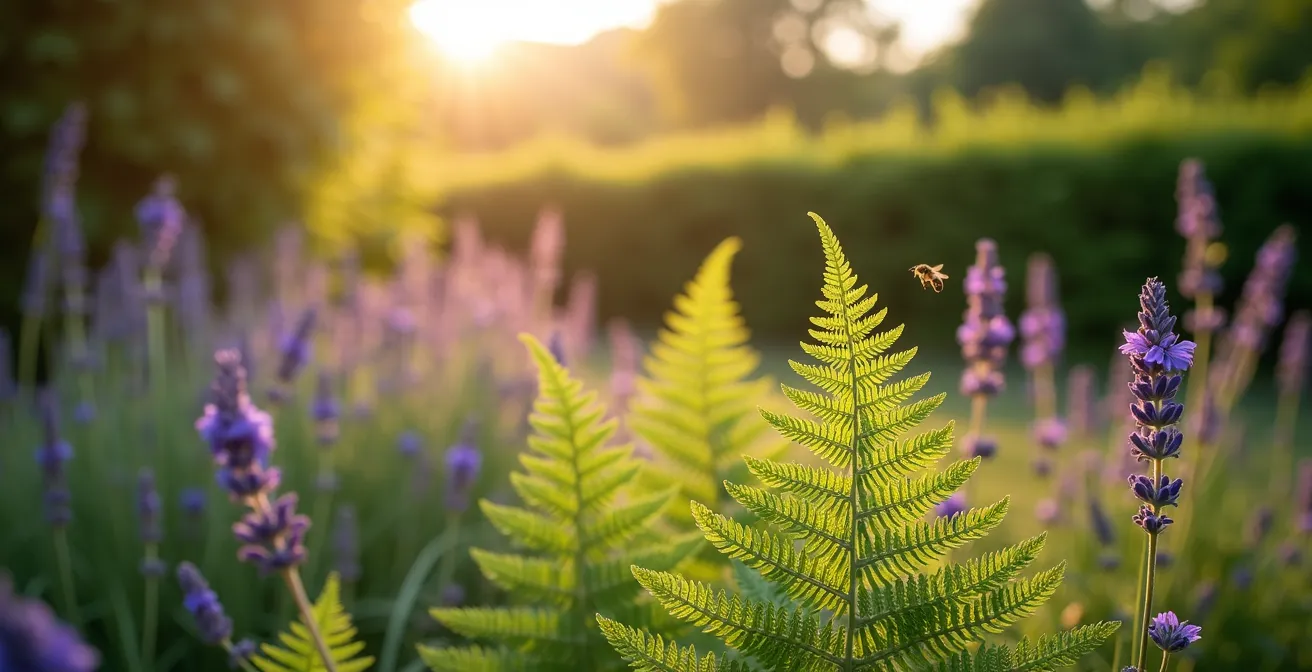
Creating a garden that calms anxiety isn’t about specific ‘relaxing’ plants, but about fostering a resilient ecosystem that mirrors and strengthens your own mental well-being.
- Designing with native, low-maintenance plants and ‘managed wildness’ reduces your mental load and connects you to natural cycles.
- Functional green barriers like hedgerows create true urban sanctuaries by supporting wildlife, blocking noise, and offering profound sensory immersion.
Recommendation: Shift your goal from a ‘perfect’ garden to a ‘living’ one. Its ecological resilience will become your own source of strength.
In our bustling urban lives, the yearning for a peaceful retreat is a shared human experience. We seek refuge from the constant hum of traffic and the persistent glow of screens. Many of us turn to our gardens, balconies, or window boxes, hoping to cultivate a small patch of serenity. The common advice is to plant fragrant lavender or install a gentle water feature, creating a space that appeals to our senses. But these are often isolated solutions in a high-maintenance setting that can, paradoxically, add to our stress.
What if the conventional approach is missing the point? We meticulously design for our own comfort, yet often work against the very nature we seek to embrace. This creates a fragile, demanding space that relies on constant intervention. The true secret to a restorative garden lies in an unexpected connection: linking the physical resilience of the garden itself to our own mental resilience. It’s a shift from seeing our garden as a decorative space to viewing it as a living, breathing ecosystem.
This article will guide you through a different way of thinking. Instead of simply decorating a space, we will explore how to cultivate a functioning ecosystem that works with nature, not against it. By designing a garden that is resilient, self-sustaining, and a haven for crucial pollinators like bees, you create a powerful biophilic feedback loop. In supporting nature, you will find that nature, in turn, profoundly supports you. We will uncover the science behind why natural patterns calm us, how to build a true sanctuary even in a small space, and why choosing life over artificial perfection is the ultimate act of self-care.
This guide provides a complete roadmap for transforming your outdoor space into a sanctuary for both you and local wildlife. Explore the sections below to understand the principles of designing for resilience and well-being.
Summary: Your Guide to a Resilient and Restorative Garden
- Why Does Seeing Fractal Patterns in Plants Lower Your Blood Pressure?
- How to Use Planting to Block Traffic Noise and Create a Quiet Zone
- Manicured Beds vs Resilient Planting: Which Is Better for Mental Load?
- The Artificial Grass Trap: Why It Increases Garden Temperatures and Stress
- How to Create a Green Wall on a Tiny Balcony for Maximum Immersion
- Why Do UK Songbirds Abandon Gardens With Wooden Fences?
- Where to Place Your Rewilding Zone to Avoid Hay Fever Issues
- Why Are Native Hedgerows Better Than Fencing for UK Garden Privacy?
Why Does Seeing Fractal Patterns in Plants Lower Your Blood Pressure?
The calming effect of nature is not just a poetic notion; it is a neurological reality. Our brains are hardwired to respond to the patterns of the natural world, particularly the repeating, self-similar shapes known as fractals. You see them everywhere in a garden: the branching of an English Oak, the unfurling of a Male Fern frond, the intricate vein structure of a leaf. These patterns are complex yet orderly, and our visual system can process them with remarkable ease. This “fractal fluency” induces a state of relaxed alertness.
When you gaze upon these natural geometries, your brain produces more alpha waves—the brainwaves associated with a calm, wakefully relaxed state. This process is passive and effortless, a stark contrast to the cognitive load of navigating a man-made environment filled with straight lines and unvarying textures. Research has found that looking at fractals can reduce stress levels by as much as a staggering 60%, a phenomenon directly linked to a decrease in stress-related physiological responses.
This principle is a cornerstone of practices like ‘Shinrin-yoku’ or forest bathing, which originated in Japan. It’s not about hiking or exercise; it’s about sensory immersion in a living environment. As an often-cited study on the practice demonstrates, the benefits are measurable and profound.
Case Study: The Japanese Forest Bathing Blood Pressure Study
Japanese researchers observed participants who walked in 24 different forests compared to those who walked in city centres. The results were clear: the forest walkers showed a 15.8% decrease in the stress hormone cortisol, a 1.9% drop in blood pressure, and a 3.9% drop in heart rate. This highlights how simply being in a natural, fractal-rich environment actively calms the body’s stress response system.
By consciously selecting plants with clear fractal patterns, you are not just adding visual interest; you are embedding a scientifically-backed therapeutic tool into your garden. You are curating a space that speaks a language your brain inherently understands and finds deeply soothing, lowering your blood pressure and promoting a state of natural calm.
How to Use Planting to Block Traffic Noise and Create a Quiet Zone
A true sanctuary must offer a retreat from the auditory stress of urban life. While a solid wall can block noise, it often creates an enclosed, sterile feeling and can reflect sound elsewhere. A far more effective and life-affirming solution is to use a dense, layered barrier of plants. A “green wall” of vegetation doesn’t just block sound; it absorbs, deflects, and refracts sound waves, creating a noticeably quieter and more peaceful environment. This is especially effective for high-frequency noises like tire hum and sirens.
The effectiveness of a plant barrier depends on its density, height, and depth. A mix of evergreen and deciduous species provides year-round structure and a variety of leaf shapes and sizes to diffuse different sound frequencies. According to RHS research, vegetation shelter belts can reduce noise by up to an impressive 8 decibels, which the human ear perceives as a significant drop in loudness. In addition to reducing external noise, the rustling of leaves and grasses in the breeze creates a gentle, natural “white noise” that masks remaining intrusive sounds.
Choosing the right UK native plants is key to creating a successful and resilient sound barrier that also supports local wildlife. The goal is to build a multi-layered structure that combines the solid mass of evergreen leaves with the intricate twiggy networks of deciduous species.
The following table, based on recommendations from horticultural experts, outlines some excellent choices for an English garden context, explaining how each contributes to noise reduction.
| Plant Species | Type | Noise Reduction Method | Maintenance |
|---|---|---|---|
| Holly (Ilex aquifolium) | Evergreen | Large leaves block high-frequency noise | One cut per year |
| Hawthorn (Crataegus monogyna) | Deciduous | Dense twiggy structure diffuses sound waves | Two cuts per year |
| Deschampsia cespitosa | Ornamental Grass | Creates masking sounds in breeze | Annual trim |
By thoughtfully combining these types of plants, you can construct a living wall that not only muffles the city’s clamour but also becomes a beautiful, textured, and ecologically valuable feature of your garden sanctuary.
Manicured Beds vs Resilient Planting: Which Is Better for Mental Load?
The image of a “perfect” garden is often one of pristine, manicured beds with neatly arranged annuals and zero weeds. While visually tidy, this aesthetic comes at a high cost to both the environment and your own mental well-being. This style of gardening requires constant intervention: deadheading, weeding, watering, and replacing plants each season. It places you in a constant battle against nature, a source of persistent, low-level stress and a heavy mental load.
A resilient planting approach, often associated with “rewilding” or “managed wildness,” offers a profound alternative. It focuses on using perennial plants, especially UK natives, that are adapted to the local climate and soil. These plants establish themselves and return year after year, reducing the need for constant work. It embraces self-seeders like foxgloves and allows natural leaf litter to become mulch and habitat. This isn’t about letting a garden become an overgrown mess; it’s about curating a largely self-sustaining ecosystem.
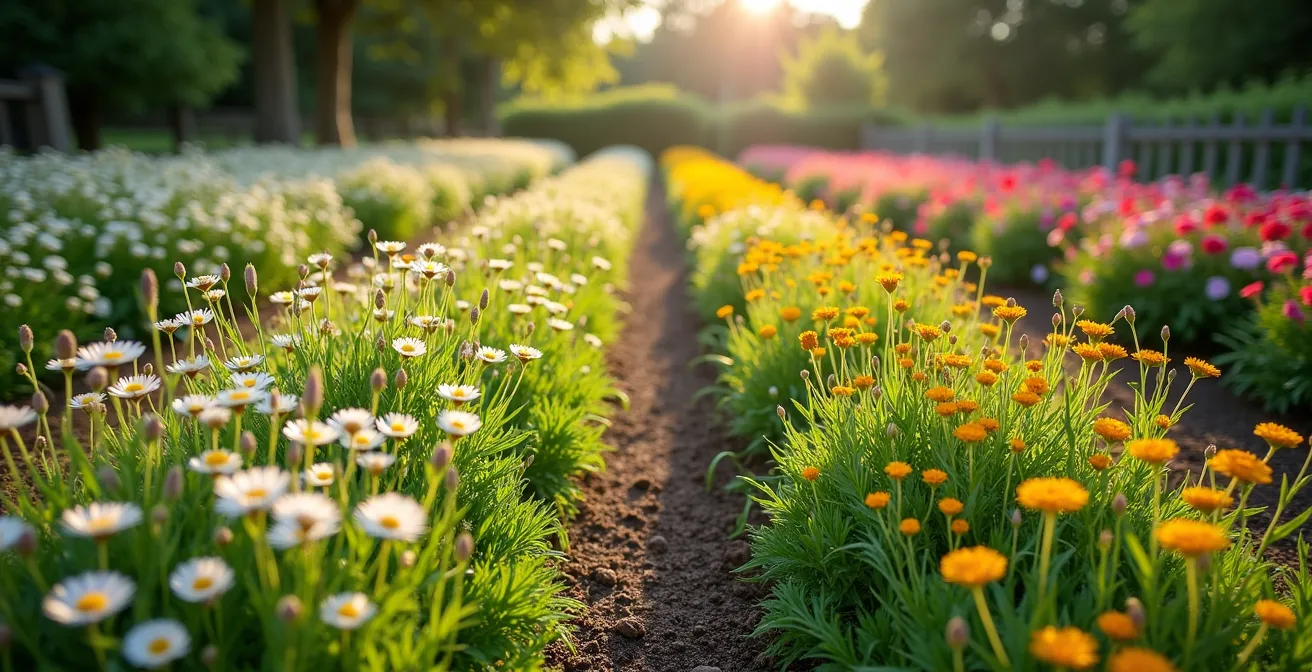
As this image illustrates, the contrast is stark. The resilient meadow on the left is teeming with life and diverse textures, requiring minimal input beyond an annual cut. The formal bed on the right demands constant vigilance to maintain its artificial order. By shifting your approach, you move from being a garden “manager” to a garden “observer.” You free up your time and mental energy to simply enjoy the space, watching it evolve and support a growing community of bees, birds, and other beneficial insects. This process fosters a sense of connection and reduces the pressure to perform, which is far more beneficial for long-term stress reduction.
Transitioning from a high-maintenance to a resilient garden is a gradual process. It involves letting go of the need for absolute control and embracing a more collaborative relationship with nature. The reward is a garden that is not only beautiful and full of life but also a genuine source of rest and restoration for your mind.
The Artificial Grass Trap: Why It Increases Garden Temperatures and Stress
In the quest for a low-maintenance garden, artificial grass is often presented as the perfect solution: a perpetually green, weed-free lawn. However, this convenience is a trap that comes with significant hidden costs for the environment, your well-being, and the wildlife you hope to attract. Plastic lawns are ecological dead zones. They offer no food or shelter for pollinators, smother soil life, and contribute to plastic pollution as they degrade. They are the antithesis of the living, breathing ecosystem we aim to create for mental restoration.
Furthermore, artificial turf has a dramatic impact on the microclimate of your garden. Unlike natural grass, which cools the air through transpiration, plastic absorbs and radiates heat. On a sunny day, its surface temperature can become dangerously high, making the space unusable. University of Manchester research found that natural grass surfaces were up to 24°C cooler than artificial alternatives. This turns your potential cool refuge into an urban heat island, increasing discomfort and stress rather than alleviating it.
The choice to reject artificiality and embrace what some might call “weeds” is a powerful one. It is a shift towards ecological understanding and appreciation, as eloquently stated by a natural history filmmaker.
Hedge species with the highest overall pool of benefits (cooling, removing airborne pollutants, reducing flooding) include beech, hawthorn and holly
– Dr. Tijana Blanusa, RHS Research on Urban Hedges
This perspective is supported by major UK conservation bodies. The Royal Horticultural Society (RHS) and The Wildlife Trusts have taken strong positions against plastic lawns due to their negative impact on biodiversity and soil health. Opting for a living lawn, a patch of clover, or a wildflower meadow instead is a choice that fosters life, cools your environment, and provides the sensory richness—the scent of cut grass, the feeling of soft earth—that is essential for a truly restorative experience.
How to Create a Green Wall on a Tiny Balcony for Maximum Immersion
You don’t need a large garden to create an immersive natural sanctuary. Even the smallest urban balcony can be transformed into a vibrant vertical ecosystem, a “green wall” that envelops you in nature. The key is to think vertically, using walls and railings to support a tapestry of climbing plants, trailing species, and tiered planters. This approach maximizes your growing space and creates a sense of being surrounded by greenery, which is crucial for mental well-being.
For a truly resilient and beneficial green wall in the UK, focus on native or well-adapted species that can handle the specific conditions of a balcony, such as wind and limited soil depth. Incorporate plants that engage multiple senses: the scent of wild thyme, the taste of alpine strawberries, the soft texture of lamb’s ear, and the visual delight of Ivy-leaved toadflax cascading down the wall. Arranging plants at different heights, from floor level to eye level and above, enhances the feeling of sensory immersion and makes the space accessible and engaging for everyone.
The most inspiring aspect of creating a balcony garden is its ability to contribute to something much larger than itself. Your small patch of green can become a vital part of a nationwide conservation effort.
Case Study: UK B-Lines Pollinator Initiative
Buglife’s B-Lines initiative is creating a network of insect pathways across the UK, connecting habitats to help bees and other pollinators move across the landscape. Even small balcony gardens can serve as vital ‘pollinator service stations’ when planted with native, nectar-rich species. By participating, urban gardeners contribute to wider Nature Recovery Networks, giving them a profound sense of purpose and connection to national conservation efforts.
By planting a green wall, you are not just decorating your balcony. You are building a living habitat, a sensory retreat, and a functional stepping stone for wildlife. You are weaving your personal sanctuary into the larger ecological fabric of the country, creating a powerful biophilic feedback loop where nurturing nature directly nurtures your own sense of purpose and well-being.
Why Do UK Songbirds Abandon Gardens With Wooden Fences?
The soundscape of a garden is as important as its visual appeal. The cheerful chirping of a robin or the complex song of a blackbird are integral to a restorative experience. However, many modern urban gardens have become silent, and a primary culprit is the ubiquitous wooden fence. While providing privacy, solid fences create sterile, exposed environments that are perilous for small birds. They offer no food, no shelter from predators, and no safe corridors for movement.
Songbirds, especially species like wrens and dunnocks, require dense cover to nest, forage for insects, and hide from threats. A tall wooden fence acts as a perfect lookout post and pathway for predators, most notably domestic cats. With nowhere to dart for safety, birds will simply abandon gardens they perceive as too dangerous. The numbers are sobering; it’s estimated that domestic cats in UK gardens are estimated to kill over 27 million birds annually. Providing dense, thorny cover is one of the most effective ways to protect them.
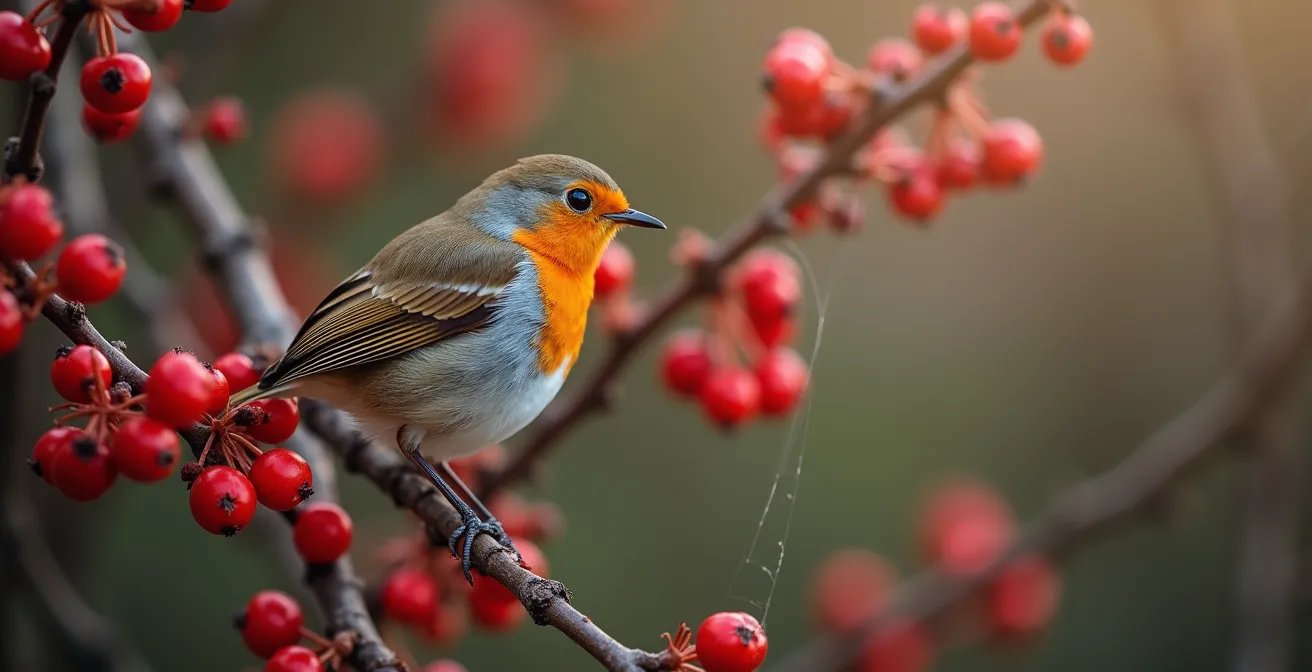
In stark contrast, a native hedgerow is a bustling hub of life. As the image shows, the dense, interwoven branches of species like hawthorn and holly provide a safe haven. Birds can nest deep within the structure, protected from predators and the elements. The flowers provide nectar for insects (which are then food for birds), and the berries offer a vital food source in autumn and winter. A hedge is not just a boundary; it is a wildlife corridor, a larder, and a nursery all in one.
By replacing a sterile fence with a living, native hedge, you are sending an open invitation to the local bird population. You are restoring a critical piece of habitat that has been lost in many urban areas. The reward is not just the satisfaction of supporting biodiversity but the return of birdsong, which enriches the sensory tapestry of your garden and deepens your connection to the natural world.
Where to Place Your Rewilding Zone to Avoid Hay Fever Issues
Embracing a “managed wildness” approach with a mini wildflower meadow is one of the most rewarding ways to support bees and reduce garden maintenance. However, for the many people in the UK who suffer from hay fever, the idea of a garden full of pollen can seem like a nightmare. Fortunately, with strategic planning, it is entirely possible to create a beautiful, bee-friendly rewilding zone without exacerbating allergy symptoms.
The key is to understand the difference between allergenic pollen and the pollen of bee-friendly flowers. Most hay fever is caused by light, airborne pollen from wind-pollinated plants, particularly certain trees (like birch) and grasses. In contrast, the flowers that attract bees and other insects are typically insect-pollinated. Their pollen is heavy, sticky, and designed to be carried by pollinators, not the wind. By choosing insect-pollinated wildflowers, you can dramatically reduce the allergen load in your garden.
Strategic placement is your other main tool. By understanding the prevailing wind direction in your garden (typically from the south-west in the UK), you can position your wildflower patch downwind from your main seating areas, doors, and windows. This ensures that any pollen that does become airborne is carried away from your living spaces.
The following table identifies some excellent low-allergen, insect-pollinated UK wildflowers, contrasting them with a common high-allergen plant to avoid placing near the house.
| Plant | Pollination Type | Allergen Level | Wildlife Benefits |
|---|---|---|---|
| Foxglove | Insect-pollinated | Low | Attracts bees |
| Red Clover | Insect-pollinated | Low | Nitrogen fixing |
| Knapweed | Insect-pollinated | Low | Butterfly magnet |
| Birch (avoid) | Wind-pollinated | High | Early pollen source |
Your Action Plan: Strategic Placement for a Low-Allergy Wild Zone
- Identify Wind Direction: Observe the prevailing south-westerly wind direction in your specific garden location.
- Place Downwind: Position your main wildflower zones downwind of primary seating areas and patios.
- Create Distance: Keep grass and wildflower rewilding areas at least 5 meters away from frequently opened windows and doors.
- Use Buffer Zones: Create a “buffer” with very low-allergen plants (like foxgloves or hostas) between wilder areas and your main living spaces.
- Time Your Mowing: If you need to mow paths or edges, do it in the early morning or after rain when pollen counts are at their lowest.
By combining smart plant selection with thoughtful placement, you can enjoy all the ecological and aesthetic benefits of a rewilding zone without the discomfort of hay fever, creating a space that is truly a sanctuary for all.
Key Takeaways
- A garden’s ability to reduce stress is directly linked to its ecological health and resilience, not just its aesthetic.
- Native plants, hedgerows, and ‘managed wildness’ reduce your mental load and create a functioning ecosystem that supports wildlife.
- Even small spaces like balconies can become vital ‘pollinator service stations’, connecting you to larger conservation efforts and a greater sense of purpose.
Why Are Native Hedgerows Better Than Fencing for UK Garden Privacy?
When seeking privacy in an urban garden, the default solution is often a tall wooden fence. It’s quick to install and effective immediately. However, a native hedgerow, while requiring more patience, is an infinitely superior choice that delivers a cascade of benefits far beyond simple screening. It embodies the core principle of this guide: what is best for nature is ultimately best for us. A hedge transforms a simple boundary into a living, breathing component of your sensory sanctuary.
Unlike a hard, reflective fence that can amplify noise and heat, a hedge absorbs sound, cools the air, and filters pollutants. Research from the RHS has quantified these benefits, highlighting species that are particularly effective. A mixed native hedge offers a multi-sensory experience that a fence can never replicate: the sight of nesting birds, the sound of buzzing bees, the scent of hawthorn blossom in spring, and the taste of foraged blackberries in late summer. This creates the deep sensory immersion that is fundamental to reducing anxiety.
The importance of hedgerows is so critical to the UK’s ecological fabric that they are now protected by law. With 50% of hedges lost since WWII due to development, The Hedgerow Regulations 1997 in England and Wales recognise their crucial role. By planting a hedge, you are not just creating privacy; you are participating in the restoration of a vital national habitat. You are creating a wildlife corridor, a food source, and a safe haven, contributing directly to the biodiversity of your neighbourhood.
Choosing a native hedgerow over a fence is a profound statement. It is a decision to invest in a resilient, living system rather than a static, sterile barrier. It creates a boundary that is not only more effective at creating a peaceful sanctuary but also actively gives back to the environment and enriches your daily experience of your garden. It is the ultimate expression of building a space where your well-being and the health of the ecosystem are one and the same.
Begin your journey today by choosing one small area to transform. Replace a patch of high-maintenance annuals with native perennials, or start a small pot of wild thyme on your balcony. The first step towards a resilient garden, and a more resilient you, is just one plant away.