Home & housing
England’s housing stock presents a unique challenge: millions of period properties built long before energy efficiency became a priority, now facing unprecedented pressure to reduce carbon emissions and energy consumption. From Victorian terraces with solid walls to Edwardian homes with draughty floorboards, the journey toward sustainable housing requires more than good intentions—it demands technical knowledge, careful planning, and an understanding of how traditional construction methods interact with modern insulation techniques.
The landscape has shifted dramatically in recent years. Energy Performance Certificates now influence property values and saleability, regulatory requirements tighten for landlords, and homeowners face the dual pressure of rising energy costs and environmental responsibility. This comprehensive resource explores the essential elements of retrofitting English homes sustainably, from understanding moisture physics in solid brick walls to navigating the complex grant landscape, ensuring your improvements enhance both comfort and property value without compromising structural integrity.
Why Energy Efficiency Is Reshaping England’s Property Market
The concept of a “green premium” has emerged in property transactions across England, where homes with higher EPC ratings command better prices and sell faster than their inefficient counterparts. This isn’t merely a trend—it reflects fundamental shifts in buyer priorities, mortgage lending criteria, and rental regulations.
Properties with EPC ratings below C increasingly face challenges in the mortgage market, with some lenders applying stricter criteria or higher interest rates. For landlords, the Minimum Energy Efficiency Standards (MEES) create a legal floor, making properties rated F or G unlettable. The direction is clear: energy efficiency has transitioned from a nice-to-have feature to a critical component of asset value and marketability.
Understanding this market shift helps homeowners prioritize improvements strategically. The most valuable retrofits aren’t necessarily the most expensive—they’re the ones that demonstrably improve your EPC rating whilst addressing genuine comfort and running cost issues. This requires thinking beyond quick fixes and considering how different measures work together as a system.
The Unique Challenge of Period and Traditional Construction
England’s architectural heritage creates particular technical challenges. Unlike modern cavity-wall construction, Victorian and pre-1930s properties typically feature solid brick walls, suspended timber floors, single-glazed sash windows, and construction methods designed to “breathe” rather than create airtight thermal envelopes.
How Traditional Buildings Manage Moisture
Solid brick walls function fundamentally differently from modern construction. They allow moisture to move through the wall structure, evaporating from external surfaces. This hygroscopic behavior means water can be absorbed and released without damage—provided the system isn’t disrupted. Applying impermeable materials like cement render or closed-cell foam insulation can trap moisture within the wall structure, leading to interstitial condensation, damp patches, and structural deterioration.
Heritage and Listed Building Constraints
For Grade II listed properties, any alteration (not just repair) requires Listed Building Consent. The distinction matters enormously: replacing like-for-like is generally acceptable, but introducing modern materials or changing the building’s character triggers regulatory scrutiny. Reversible interventions—changes that can be undone without permanent alteration—offer the safest path, such as vacuum glazing installed within existing frames or removable secondary glazing rather than replacement units.
Decoding Energy Performance Certificates
The EPC rating system uses RdSAP methodology (Reduced data Standard Assessment Procedure), which estimates energy performance based on visible features and standard assumptions rather than actual consumption. Understanding this calculation is crucial because it reveals which improvements deliver the most rating points per pound spent.
Effective strategies include:
- Loft insulation to 270mm: Often the highest-impact, lowest-cost improvement for rating points
- Hot water cylinder insulation and controls: Simple upgrades that significantly affect the calculation
- Modern boiler with weather compensation: Heating system efficiency heavily weights the rating
- Low-energy lighting throughout: Now baseline expectation but still affects scores
The risk lies in “locking in” poor-quality measures solely to achieve a rating threshold. A rushed external wall insulation job using inappropriate materials might boost your EPC to a C, but create long-term moisture problems that cost far more to remediate. The rating is a tool, not the ultimate goal—the real objective is a comfortable, healthy, efficient home.
Key Retrofit Measures: Technical Approaches and Material Choices
Solid Wall Insulation: Internal Versus External
For pre-1930s homes without cavities, wall insulation represents the most expensive and disruptive retrofit measure. External wall insulation (EWI) wraps the building in an insulated render or cladding system, preserving internal floor space but dramatically altering appearance—often requiring planning permission, particularly in conservation areas. Internal wall insulation (IWI) maintains external aesthetics but sacrifices 50-100mm of room dimension and requires careful detailing at window reveals to avoid thermal bridging.
Material choice affects performance and breathability. Rigid foam boards (EPS) offer high R-values per millimeter but little vapor permeability. Wood fiber boards cost more but allow moisture movement, making them safer for traditional construction. For truly breathable approaches, insulating lime plasters or hempcrete maintain the hygroscopic properties of original lime mortars and brickwork.
Window Treatments: Preservation Versus Replacement
Original box sash windows often receive unfair criticism. A well-maintained, draught-proofed sash window with heavy curtains or shutters performs better than commonly assumed. Secondary glazing—adding an additional pane with an air gap—dramatically improves thermal and acoustic performance without replacing primary windows. Magnetic systems allow DIY installation and easy removal for cleaning, while slimline vacuum glazing can be retrofitted into existing frames with minimal visual impact.
For listed buildings or conservation areas, this approach preserves heritage features whilst achieving practical thermal improvements, avoiding the planning complications and aesthetic compromises of full replacement.
Loft and Floor Insulation: Avoiding Common Pitfalls
Loft insulation appears straightforward—”roll it out and forget it”—but poor installation creates problems. Blocking eaves ventilation traps moisture in the roof void, causing condensation and timber decay. Compressing insulation around cables and spotlights reduces effectiveness and creates fire risks. Achieving the recommended 270mm depth requires cross-layering: 100mm between joists, then 170mm perpendicular layer on top.
Suspended timber floors in pre-war homes create a “wind tunnel” effect underneath, wasting heat. However, sub-floor voids require ventilation to prevent joist rot, making insulation strategy crucial. Insulating between joists whilst maintaining airflow beneath prevents moisture accumulation against timber. Robotic spray insulation offers a modern solution, accessing the void through small openings and applying breathable insulation precisely where needed.
Navigating UK Energy Retrofit Grants and Funding
The landscape of retrofit funding changes frequently, but several key schemes operate across England. ECO4 (Energy Company Obligation) targets lower-income households and properties with poor EPC ratings, offering fully funded or heavily subsidized measures through obligated energy suppliers. The Great British Insulation Scheme (GBIS) provides support for specific insulation measures regardless of income, focusing on loft, cavity wall, and some solid wall treatments.
The Boiler Upgrade Scheme (BUS) offers grants toward low-carbon heating systems—heat pumps and biomass boilers—though eligibility requires adequate property insulation first. All schemes require MCS-certified installers (Microgeneration Certification Scheme), ensuring technical competence and enabling warranty protections.
Critical warnings about “free” offers from cold-callers: legitimate grant-funded work exists, but aggressive sales tactics often indicate poor-quality installations focused on maximizing installer profit rather than appropriate solutions. Always verify installer credentials independently, obtain multiple quotes, and ensure measures suit your specific property type—cavity wall insulation in a solid-wall Victorian terrace isn’t just ineffective, it’s impossible.
Managing Retrofit Projects: PAS 2035 and Professional Coordination
For grant-funded projects, PAS 2035 compliance is mandatory—a framework ensuring whole-house assessment rather than piecemeal interventions. This involves a Retrofit Coordinator who creates a Medium-Term Improvement Plan considering how different measures interact, sequences work appropriately, and identifies risks like moisture lock-in.
The fundamental principle is “fabric first”: improve the building envelope (insulation, airtightness, ventilation) before upgrading heating systems. Installing an expensive heat pump in a poorly insulated house means oversized equipment running inefficiently. Conversely, creating an airtight envelope without mechanical ventilation traps moisture and pollutants, causing condensation and poor indoor air quality.
Proper sequencing might look like: loft and floor insulation first (least disruptive), then wall insulation, followed by draught-proofing and ventilation improvements, finally heating system upgrades. Each stage builds on the previous, progressively reducing heat loss until low-temperature heating systems become viable.
Disruption scheduling matters enormously for occupied homes. Living through a deep retrofit challenges even enthusiastic homeowners—dust, noise, room access restrictions, and the stress of coordinating multiple trades. A skilled coordinator phases work to maintain habitable spaces, combines trades efficiently to minimize duration, and ensures proper handover between sequential stages.
This comprehensive approach transforms English homes into comfortable, efficient, sustainable dwellings whilst respecting their architectural character and structural integrity. Whether you’re improving a listed Georgian townhouse or a 1920s semi-detached, understanding these principles helps you make informed decisions, avoid costly mistakes, and create lasting value in both environmental and financial terms.

How to Stop Draughts Rising Through Your Floorboards Without Lifting Them?
That persistent chill you feel coming through the floorboards isn’t just a simple gap-filling problem. The real solution lies in understanding and managing the entire…
Read more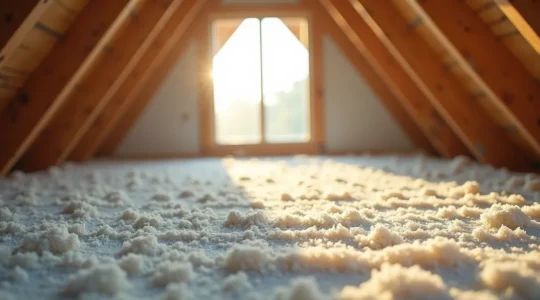
Why Is Compressing Your Loft Insulation Reducing Its Efficiency by 50%?
Squashing loft insulation under floorboards doesn’t just reduce its efficiency; it actively creates a pathway for heat loss and damaging condensation that can rot your…
Read more
How to Stop Sash Windows Rattling and Leaking Heat Without Replacing Them?
The persistent rattle and chill from your sash windows are symptoms of a fixable mechanical imbalance, not a sign they need replacing with modern uPVC….
Read more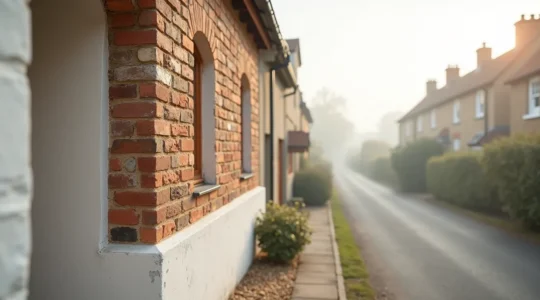
Why Is Lime Plaster Essential for the Longevity of Pre-1919 Homes?
The persistent damp in your old home isn’t a problem to be sealed; it’s a symptom of a breathable structure being suffocated by modern materials….
Read more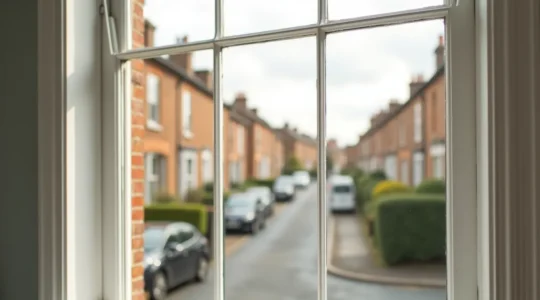
Why Is Secondary Glazing Often Better Than Double Glazing for Noise Reduction?
For urban properties with window restrictions, secondary glazing often provides superior noise reduction to standard double glazing, not as a budget alternative, but through better…
Read more
Is Your Period Home’s Charm a Liability? The Truth About EPC Ratings and Property Value
In today’s market, the ‘character’ of a period home no longer guarantees its value; its thermal performance and mortgageability do. An F-rated EPC is a…
Read more
How to Insulate a Grade II Listed Home Without Angering the Conservation Officer?
The key to upgrading a listed building isn’t the materials you choose, but mastering the legal distinction between ‘repair’ and ‘alteration’ and prioritising full reversibility….
Read more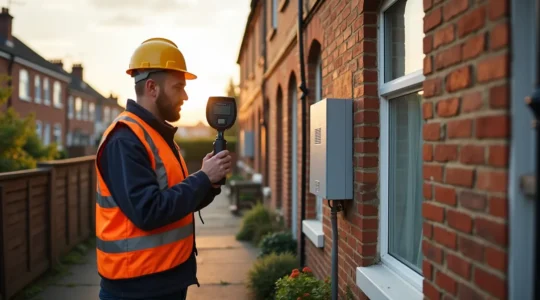
How to Project Manage a Whole-House Retrofit to PAS 2035 Standards?
Managing a PAS 2035 retrofit is less about ticking compliance boxes and more about proactively mitigating risks to protect your financial and personal investment. Strategic…
Read more
How to Check Your Eligibility for the £7,500 Boiler Upgrade Scheme?
In summary: The £7,500 Boiler Upgrade Scheme (BUS) grant is for heat pumps, not gas boilers, and requires a valid Energy Performance Certificate (EPC) with…
Read more
Internal vs External Wall Insulation: Which Is Right for Your Brick Property?
For owners of solid brick properties, the choice between internal and external insulation is not a simple trade-off between cost and space; it is a…
Read more