Energy transition
The energy landscape in England is undergoing its most significant transformation in generations. Homeowners across the country are facing critical decisions about how they power and heat their properties, driven by ambitious climate targets, evolving regulations, and the promise of lower running costs. Yet navigating this transition can feel overwhelming, with conflicting information about technologies, costs, and whether renewable systems truly work in the British climate.
This shift isn’t simply about swapping one technology for another—it’s about understanding how solar panels, heat pumps, and grid-connected systems work together to create genuinely sustainable homes. Whether you’re considering your first renewable installation or trying to make sense of the upcoming changes to gas heating, this comprehensive resource will equip you with the knowledge to make confident, informed decisions tailored to your specific circumstances.
Understanding Solar Power for Your Home
Solar energy remains one of the most accessible entry points into renewable technology for English homeowners, but persistent myths about the UK’s cloudy climate often deter potential adopters. The reality is considerably more nuanced and, for many properties, far more economically viable than commonly assumed.
Financial Viability and System Design
The economics of solar installation have shifted dramatically in recent years. Without relying on government subsidies, a well-designed system can achieve payback within a realistic timeframe, particularly when sized to match your household’s consumption patterns. The key lies in understanding that self-consumption—using the electricity you generate rather than exporting it—drives the strongest financial returns.
System sizing deserves careful consideration beyond just maximising roof coverage. Forward-thinking homeowners are increasingly designing installations to accommodate future electrification—anticipating the addition of heat pumps or electric vehicles that will significantly increase electricity demand. A 4kW system might suffice for current usage, but a 6-8kW installation could prove transformative once heating shifts from gas to electricity.
Roof characteristics fundamentally influence performance. South-facing roofs at a 30-40 degree pitch deliver optimal output, but east-west configurations can provide more consistent generation throughout the day, better matching typical household consumption patterns. Even north-facing arrays can contribute meaningfully, though the financial case weakens considerably.
Installation Considerations and Technical Choices
The installation process typically requires scaffolding for one to three days, creating temporary disruption to access and aesthetics. Understanding this timeline helps with planning, particularly if you’re coordinating multiple trades or have specific scheduling constraints.
Two fundamental technical decisions significantly impact long-term performance and flexibility:
- String inverters offer lower upfront costs and simpler maintenance but suffer when any panel is shaded or underperforming, as they’re electrically connected in series
- Micro-inverters attached to individual panels cost more initially but optimize each panel independently, delivering superior performance on complex roof layouts or partially shaded installations
- The choice becomes particularly critical on properties with chimneys, dormers, or nearby trees that create variable shading patterns throughout the day
An often-overlooked risk specific to UK installations is pigeon nesting beneath panels. These birds find the sheltered space irresistible, and their activity can damage wiring and create hygiene issues. Installing mesh guards during initial setup prevents future problems far more cost-effectively than retrospective solutions.
Transforming Home Heating Beyond Gas
Heating represents the largest energy demand in most English homes, and moving away from gas-fired systems presents both the greatest challenge and the most significant opportunity for reducing carbon emissions. The heating landscape has expanded far beyond traditional options, but not all technologies suit every property type.
Heat Pumps: Separating Fact From Fiction
Heat pumps have become simultaneously the flagship technology of the energy transition and the subject of considerable misinformation. Understanding what they genuinely deliver—and what they require to perform effectively—is essential for realistic expectations.
The coefficient of performance (COP) measures how efficiently a heat pump converts electricity into heat. A COP of 3.5 means that for every unit of electricity consumed, 3.5 units of heat are delivered—a remarkable achievement that conventional heating cannot match. Modern systems maintain impressive efficiency even during cold English winters, though performance does decline as outdoor temperatures drop.
Noise concerns often surface in discussions, yet properly specified and positioned units typically operate at sound levels comparable to a modern condensing boiler or refrigerator. The outdoor unit location requires thoughtful planning—positioning too close to bedrooms or neighbouring properties can create avoidable friction, whilst placing units in recessed courtyards may restrict airflow and compromise performance.
Heat pumps operate most effectively with low flow temperatures—the water circulating through radiators runs at 40-50°C rather than the 60-75°C typical of gas systems. This fundamental difference necessitates larger radiator surface areas to deliver equivalent heat output. Many existing radiators can be retained, but room-by-room heat loss calculations determine whether upgrades are necessary in specific spaces.
The choice between monobloc systems (all components in the outdoor unit) and split systems (components divided between indoor and outdoor units) involves trade-offs between installation complexity, aesthetic impact, and efficiency. Undersized pipework represents a common pitfall that silently undermines performance, making professional hydraulic design non-negotiable rather than optional.
Alternative Heating Technologies
Heat pumps aren’t the only post-gas option, though they dominate the conversation. Infrared panels offer targeted heating for specific zones—particularly effective in well-insulated rooms used intermittently, such as home offices or guest bedrooms. They deliver comfort quickly but lack the whole-house efficiency of heat pumps for primary heating.
Direct electric heating—conventional radiators or storage heaters—provides the simplest installation but the highest running costs. The risk lies in assuming that because installation is inexpensive, the technology represents good value. Operating costs typically exceed heat pumps by a factor of three or more, making this option viable only for very specific circumstances like rarely used spaces.
Sophisticated system controls have evolved to become as important as the heating technology itself. Optimising comfort whilst managing running costs requires thoughtful programming, zoning, and sometimes weather compensation that adjusts output based on outdoor conditions.
What Does the Gas Boiler Phase-Out Really Mean?
Few policy announcements have generated more confusion and anxiety among homeowners than the planned phase-out of new gas boiler installations. Understanding what the regulations actually require—and what they don’t—is essential for avoiding both panic and poor decisions.
The core policy prevents new gas boiler installations in new-build properties from the middle of the current decade, with existing homes following later. Critically, this does not criminalise existing boilers or prevent replacement of failed units in existing properties during the transition period. Your current boiler can continue operating, and emergency replacements remain available when systems fail unexpectedly.
The distinction between emergency replacement and planned upgrade profoundly affects decision-making. A boiler failing in January demands immediate replacement with whatever technology can be installed within days—typically another gas boiler currently. Planning proactively whilst your existing system still functions opens up heat pump options, time for proper sizing, and access to any available support schemes.
Marketing claims around “hydrogen-ready” boilers deserve particular scrutiny. Whilst these appliances theoretically could operate on hydrogen fuel rather than natural gas, the infrastructure to deliver hydrogen to homes remains largely theoretical. Purchasing decisions based primarily on hydrogen compatibility represent speculation rather than practical planning.
Comparing repair costs against new installation costs becomes increasingly complex as boilers age. A £400 repair on a 12-year-old boiler might seem economical, but if further failures are likely within 18 months, the total cost of repeated repairs plus eventual replacement could exceed a planned upgrade undertaken on your timeline rather than the boiler’s.
Properties in off-grid areas relying on oil or LPG face particular considerations. The risk of stranded assets—expensive heating systems that become unsupported or uneconomical—looms larger when fuel supply chains evolve. For these homes, heat pumps often present even stronger financial and practical cases than for grid-connected properties.
For those retaining gas systems in the medium term, optimising existing condensing boiler efficiency through proper controls, regular servicing, and appropriate flow temperatures can reduce both costs and emissions whilst you plan your longer-term strategy.
Optimising Performance and Connecting to the Grid
Installing renewable technology represents only the beginning—extracting maximum value requires ongoing optimisation and, for solar installations, navigating the systems that allow you to benefit from surplus generation.
Maintaining Peak Solar Performance
Solar panels are remarkably low-maintenance, but several factors influence whether they deliver their rated performance over their 25-30 year lifespan. The temperature coefficient describes how panel output decreases as temperatures rise—counterintuitively, panels actually perform better on cold, bright days than hot, sunny ones. English weather patterns generally favour good performance on this metric.
Cleaning panels safely involves understanding that rainfall handles most dust and pollen naturally. Intervention becomes worthwhile only when bird droppings, leaves, or other debris accumulate sufficiently to block light. When cleaning proves necessary, working from ground level with extended brushes prevents the safety risks of roof access.
Understanding warranty structures prevents nasty surprises. Product warranties cover manufacturing defects (typically 10-12 years), whilst performance warranties guarantee minimum output levels (usually 80-85% of rated capacity after 25 years). These are distinct commitments, and both matter when comparing systems.
Inverter clipping occurs when panel generation exceeds inverter capacity—the surplus energy is simply lost. Slight clipping (1-3% annually) often represents acceptable system design optimising cost-effectiveness, but substantial clipping indicates poor specification that permanently undermines system economics.
Bypass diodes, built into panels, allow current to route around shaded cells rather than the shadow crippling entire panel output. Whilst you won’t optimise these yourself, understanding their function helps evaluate whether partial shading makes micro-inverters worthwhile for your specific installation.
Selling Energy Back to the Grid
Exporting surplus solar generation provides additional value, but the systems governing this process involve bureaucracy that surprises many first-time installers. The Smart Export Guarantee (SEG) requires licensed suppliers to offer payment for exported electricity, though rates and terms vary substantially between providers.
Distribution Network Operator (DNO) applications represent a crucial regulatory step. G98 applications cover installations up to 3.68kW per phase (standard for most domestic solar), whilst G99 applications apply to larger systems. G98 typically involves simple notification, whereas G99 requires formal approval before installation proceeds.
Applying for SEG tariffs involves providing installation certification and meter details to your chosen supplier. Fixed export rates offer predictable income but may lag market rates, whilst variable rates can deliver higher returns but introduce uncertainty. Some innovative tariffs pay premium rates during peak demand periods, rewarding battery storage systems that can time exports strategically.
Export limitation clamps may be mandated by your DNO if local grid capacity is constrained, restricting how much power you can feed back. This affects system economics by reducing export income, making self-consumption through battery storage or load-shifting even more valuable.
Metering arrangements can be optimised through separate export MPANs (Meter Point Administration Numbers), allowing you to import electricity from one supplier whilst exporting to another offering better rates. This administrative complexity delivers genuine financial benefits for larger installations with substantial export volumes.
The energy transition journey differs for every household, shaped by property characteristics, budget constraints, and personal priorities. What remains constant is that informed decisions—grounded in realistic expectations and tailored to your specific circumstances—deliver far better outcomes than following trends or reacting to policy deadlines. The technologies enabling home decarbonisation have matured to the point where they offer genuine practical and financial benefits, not just environmental credentials. Taking time to understand how these systems actually work in English homes empowers you to participate in this transformation confidently and successfully.
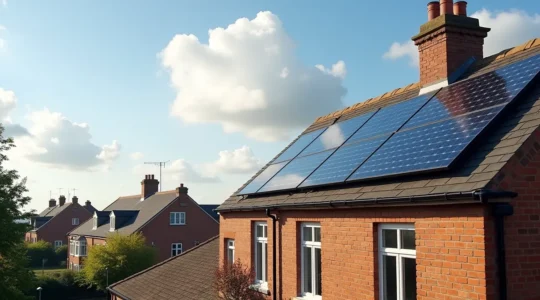
How to Get Paid for Your Excess Solar Energy via the Smart Export Guarantee?
In summary: Determine if you require a G98 (automatic) or G99 (manual) DNO permission based on your system’s size before installation. You can switch SEG…
Read more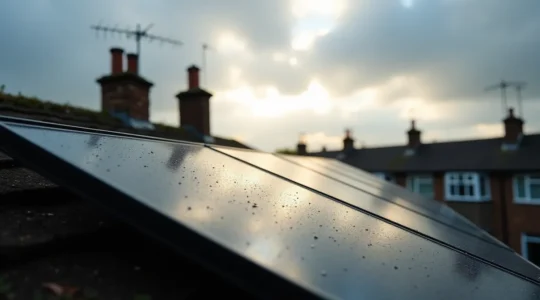
How to Maintain Solar Panel Efficiency After 5 Years of UK Weather?
The slight dip in your solar panel generation after a few years isn’t just inevitable aging; it’s often a combination of manageable technical factors unique…
Read more
Do Air Source Heat Pumps Really Work in Freezing UK Winters?
Contrary to common UK horror stories, an air source heat pump’s success in winter isn’t a matter of luck; it’s the predictable result of proper…
Read more
Should You Install a New Gas Boiler Before the Ban Comes Into Effect?
Contrary to the panic, the 2035 gas boiler phase-out doesn’t mean you must rush into a heat pump today. A new, A-rated gas boiler is…
Read more
Which Low-Carbon Heating System Suits a 1990s Detached House Best?
The best low-carbon heating for a 1990s house is not a specific product, but a system correctly sized and controlled for the home’s specific heat…
Read more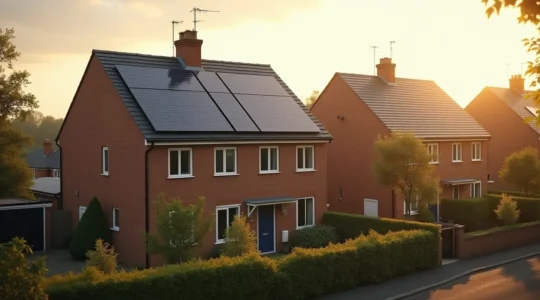
Are Solar Panels Still Worth It in the UK? A Financial Advisor’s ROI Analysis
For UK homeowners with savings, a solar panel system is no longer just an eco-friendly purchase; it’s a high-performing financial asset that can outperform a…
Read more