Ecology & environment
The ecological challenges facing England—from fragmented wildlife habitats to the carbon embedded in our built environment—can feel overwhelming in their scale and complexity. Yet the most effective responses often begin not with grand policy pronouncements, but with tangible actions taken at the level of individual properties, neighborhoods, and communities. Understanding how these local interventions connect to broader environmental outcomes transforms abstract ecological principles into practical, achievable steps.
This foundation explores the intersecting themes that define meaningful environmental action today: creating functional habitats for wildlife within domestic spaces, understanding the true carbon cost of our buildings and renovations, connecting fragmented green spaces to enable species movement, and translating distant climate targets into immediate career and community opportunities. Each of these areas offers concrete pathways for those seeking to move beyond concern toward genuine ecological contribution.
Rewilding Your Garden: Bringing Nature Home
The concept of rewilding—allowing natural processes to restore ecosystems—has traditionally operated at landscape scales. Yet its principles translate remarkably well to domestic gardens, where even modest interventions can create disproportionate ecological value. A single garden transformed into a wildlife haven becomes part of a larger network, particularly valuable in England where an estimated 87% of land is actively managed by humans.
Creating Micro-Habitats With Purpose
Micro-habitats are the building blocks of garden biodiversity. A log pile positioned in a shaded corner provides shelter for beetles, fungi, and hedgehogs seeking hibernation sites. Unlike ornamental garden features, these structures function as ecological infrastructure. The methodology matters: logs should be hardwood where possible, partially buried to maintain moisture, and left undisturbed for years to develop fungal networks that support invertebrate communities.
Think of micro-habitats as specialized housing in a neighborhood—each serves a different demographic. Rockeries provide basking spots for reptiles, while unmown grass areas create nesting sites for ground-dwelling bees. The most effective gardens contain a mosaic of habitat types rather than uniform coverage, mimicking the structural diversity of natural landscapes.
Balancing Active Management and Passive Approaches
The choice between active gardening and passive rewilding represents a spectrum rather than a binary decision. Active approaches involve deliberate planting of native species, seasonal pond management, and targeted interventions to support specific wildlife. Passive rewilding simply steps back, allowing spontaneous colonization by whatever seeds arrive naturally.
Each approach carries distinct advantages:
- Active management: Predictable outcomes, aesthetic control, ability to address specific conservation priorities (such as providing larval food plants for declining butterfly species)
- Passive rewilding: Lower maintenance burden, unexpected biodiversity arrivals, natural adaptation to local conditions without human preconceptions
- Hybrid approaches: Structured framework with wild patches, combining human enjoyment with ecological function
The risk in either approach lies in unintentional invasive species introduction. Well-meaning gardeners purchasing “wildflower meadow” seed mixes may inadvertently introduce non-native species that outcompete local flora. Checking seed provenance and favoring locally-sourced native plant stock mitigates this concern while supporting regional biodiversity patterns specific to English ecology.
Building for Net Zero: Understanding Carbon Footprints
The pursuit of Net Zero in residential property has evolved from a niche technical standard to a moral imperative shaping England’s housing market. High-end developments increasingly market Net Zero status as a premium feature, while regulations tighten around both new builds and renovation projects. Yet genuine understanding of what “Net Zero” entails remains surprisingly limited among property owners.
Operational Versus Embodied Carbon
Most homeowners instinctively think of energy bills when considering their property’s carbon footprint—the operational carbon from heating, cooling, and powering their homes. This represents only part of the equation. Embodied carbon—the emissions generated during material extraction, manufacturing, transportation, and construction—often exceeds operational emissions over the first decades of a building’s life.
Consider a typical Victorian terrace renovation: installing triple-glazed windows reduces operational carbon through improved thermal performance, but manufacturing those windows generates significant embodied carbon. If the existing double-glazed units still function adequately, the carbon “payback period” might span decades. This counterintuitive reality explains why the most sustainable renovation is often the one that reuses existing materials rather than replacing them with technically superior alternatives.
Carbon Offsetting: Quality and Verification
When emissions cannot be eliminated through efficiency measures, carbon offsetting enters the equation. The market, however, varies wildly in quality. Gold Standard and Verra represent the two dominant certification schemes, each with distinct methodologies for verifying that offset projects deliver genuine, additional carbon reductions.
Gold Standard emphasizes sustainable development co-benefits—projects must demonstrate social value alongside carbon sequestration. Verra (formerly VCS) maintains broader project eligibility with rigorous monitoring protocols. Neither guarantees perfection; instances of double-counting and questionable additionality persist across the offset market. The “rebound effect” poses an additional concern: psychologically, purchasing offsets may unconsciously justify increased emissions elsewhere, undermining the intended benefit.
Interestingly, Net Zero homes demonstrate improved resale value in England’s property market. Estate agents report premium pricing for Energy Performance Certificate A-rated properties, driven both by buyer awareness of future energy costs and by regulatory momentum making inefficient properties increasingly difficult to sell or let.
Material Choices That Matter
Every construction or renovation decision carries a carbon consequence encoded in the materials themselves. Understanding these implications requires looking beyond traditional performance criteria toward whole-lifecycle thinking.
Environmental Product Declarations
Environmental Product Declarations (EPDs) function as nutrition labels for building materials, providing standardized data on environmental impacts across a product’s lifecycle. An EPD for structural timber, for instance, quantifies embodied carbon, water consumption, and ecosystem impacts from forest to factory.
Reading EPDs requires attention to system boundaries—some manufacturers calculate “cradle-to-gate” (factory exit) while others include transportation and installation (“cradle-to-site”). Comparing products necessitates matching these boundaries. The concept of a “Carbon Mortgage” emerges from this analysis: materials with high upfront embodied carbon create a debt that must be repaid through operational savings or long service life.
Structural Material Comparisons
The steel versus timber debate crystallizes these tradeoffs. Steel offers exceptional strength-to-weight ratios and predictable engineering properties. Its production, however, remains carbon-intensive despite improving efficiency in modern electric arc furnaces. Structural timber sequesters carbon during tree growth, storing it throughout the building’s lifespan—provided the timber is sourced from sustainably managed forests rather than old-growth harvesting.
The risk of “over-specifying” materials manifests when designers select high-performance options beyond what structural analysis requires. Specifying steel where engineered timber suffices, or virgin materials where reclaimed alternatives exist, inflates embodied carbon unnecessarily. On-site material reuse—salvaging existing bricks, timber, or stone for incorporation into renovations—offers the lowest embodied carbon option while preserving historic character valued in English vernacular architecture.
Creating Wildlife Corridors Beyond Your Fence
Individual gardens, regardless of how wildlife-rich, become ecological islands if surrounded by impermeable boundaries. Species with significant territorial ranges—hedgehogs famously roam one to two kilometers nightly during active months—require connected habitat to maintain viable populations. Habitat fragmentation, exacerbated by solid fencing and development, ranks among the primary drivers of hedgehog decline across England.
The Mechanics of Connectivity
Creating functional corridors begins with understanding local wildlife ranges. Hedgehogs need openings of just 13cm by 13cm at ground level—easily achieved by drilling holes in fence panels or leaving gaps beneath gates. The methodology for drilling safely involves checking for underground services, positioning holes away from structural posts, and smoothing edges to prevent injury.
Corridors function through two primary mechanisms: continuous canopy (hedgerows and tree lines allowing arboreal species to move without touching ground) and ground-level corridors (connected undergrowth for terrestrial species). Optimal designs incorporate both, recognizing that bird species, pollinators, small mammals, and invertebrates each navigate landscapes differently.
Neighborhood-Scale Interventions
Moving beyond individual plots requires community coordination. Street verges—the narrow strips between pavement and road—represent underutilized connectivity assets. Where local authorities permit, residents can transform mown verges into perennial wildflower corridors that link gardens across streetscapes.
The challenge intensifies with new developments, where habitat fragmentation occurs through design choices made at planning stages. Advocating for wildlife corridors in local development frameworks, ensuring new estates incorporate green links rather than creating cul-de-sac ecosystems, represents scalable intervention. Several English local authorities now mandate “hedgehog highways” in new residential construction—a policy success emerging from community-level advocacy.
From Global Targets to Local Action
England’s commitment to Net Zero by mid-century exists as policy abstraction for most people—a governmental target disconnected from daily life. The transformation of this distant goal into personal career opportunities, community projects, and tangible influence represents perhaps the most crucial ecological shift required.
Understanding Personal Carbon Scopes
Corporate carbon accounting divides emissions into three scopes, a framework equally applicable to individuals. Scope 1 covers direct emissions from assets you control (personal vehicle fuel, home gas boiler). Scope 2 includes indirect emissions from purchased energy (electricity from grid). Scope 3 encompasses everything else—the supply chain emissions embedded in purchased goods, services, and investments.
For most English households, Scope 3 dwarfs the other categories, yet receives minimal attention. Pension investments, dietary choices, and consumption patterns drive the majority of individual carbon footprints. Recognition of this distribution shifts focus from isolated “green behaviors” toward systemic evaluation of lifestyle choices.
Community Energy and Collective Action
Starting a community energy project—whether solar cooperatives, district heating schemes, or collective purchasing arrangements—requires navigating technical, financial, and regulatory complexity. Successful projects typically follow a sequence: forming a legal structure (Community Benefit Society models work well in English law), conducting feasibility studies, securing funding through community shares or grant programs, and establishing operational partnerships.
The perennial debate between individual action and systemic change creates false dichotomy. Individual choices aggregate into market signals while demonstrating proof-of-concept; systemic change requires political will generated partly through demonstrated public demand. The most effective strategies pursue both simultaneously rather than treating them as alternatives.
The Green Skills Gap
England faces a documented Green Skills Gap—insufficient trained professionals to deliver retrofitting, renewable installation, ecological surveying, and sustainable land management at the scale required. This gap represents both challenge and opportunity. Those entering trades, planning careers, or seeking professional development find growing demand for expertise in heat pump installation, biodiversity net gain assessment, circular economy design, and community energy facilitation.
Local influence operates through multiple channels: participating in council climate assemblies, commenting on local plan consultations, supporting community enterprises trialing sustainable approaches, and sharing knowledge that demystifies ecological action for neighbors. These contributions, while individually modest, collectively shift the cultural and political landscape within which larger systemic changes become possible.
The ecological challenges facing England require responses operating at every scale—from the log pile in your garden to national policy frameworks. Understanding how these scales interconnect, where your specific skills and circumstances enable contribution, and which interventions generate disproportionate impact transforms environmental concern into effective action. The transition ahead is not merely technical but cultural, built from countless decisions to prioritize ecological function alongside human convenience.

How Will the Net Zero Transition Change Your Job Security by 2030?
Your long-term job security depends less on finding a niche “green job” and more on strategically repositioning your existing skills within a decarbonising UK economy….
Read more
How to Rally Your Street and Create a Hedgehog Highway Neighbourhood
Transforming your street into a wildlife haven is less about individual fences and more about starting a neighbourhood-wide conversation. Hedgehogs are just the start; connected…
Read more
Should You Demolish and Rebuild or Retrofit to Save the Most Carbon?
Contrary to popular belief, a brand-new, energy-efficient building is often less green than a well-executed retrofit due to the massive, upfront carbon debt of its…
Read more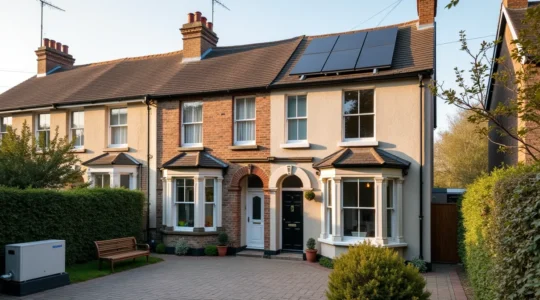
The Uncomfortable Truth: Is “True” Net Zero Carbon Achievable for Your UK Home?
Achieving “true” Net Zero in a high-value UK property is not about ticking boxes for solar panels and heat pumps; it is a forensic accounting…
Read more
Why Should Every UK Garden Dedicate 20% of Space to a Rewilding Zone?
Contrary to popular belief, rewilding isn’t about neglect; it’s about precision ecological engineering that turns your garden into a high-performance asset for UK wildlife and…
Read more